Unveiling the mystery of wound-healing
🇩🇪 Diesen Artikel auf Deutsch lesen
Wound healing is a complex biological process that allows damaged tissue to close, rebuild, and regain function. Most wounds follow a broadly predictable sequence of phases—yet healing speed and scar quality can vary widely depending on the type of injury, tissue health, circulation, infection risk, and overall recovery conditions.
A clear understanding of the basic phases of wound healing helps set realistic expectations and supports better decisions around aftercare, load management, and when to seek medical input.
1) Wound healing basics: the main phases
Wound healing is often described in overlapping phases: inflammation, proliferation, and remodelling (Gurtner et al., 2008).
Inflammation (early response)
Inflammation is the body’s immediate response to tissue damage. Immune cells help clear debris and reduce infection risk, while signalling molecules coordinate the next steps. Redness, warmth, swelling, and tenderness can be part of this phase—within a normal range and timeframe.
Proliferation (building and closing)
During proliferation, the body lays down new tissue. New blood vessels form, and fibroblasts produce collagen and other components of the extracellular matrix to support closure and early strength (Falanga, 2005). This phase is often where the wound visibly “knits together”.
Remodelling (maturation and reorganisation)
Remodelling can continue for months. Collagen fibres are reorganised and gradually strengthened, and scar tissue becomes more functional over time (Gurtner et al., 2008). Importantly, “mature” does not always mean “invisible”: scars can remain noticeable even when healing is successful.
2) When healing is delayed: common reasons
Sometimes healing does not progress smoothly. Common factors that can slow healing include:
Infection: bacterial load can prolong inflammation and disrupt tissue repair (Bowler et al., 2001).
Reduced circulation: healing tissue depends on oxygen and nutrients; impaired blood flow can slow repair (Gurtner et al., 2008).
Metabolic and systemic factors: diabetes, smoking, and some chronic illnesses can affect immune function and tissue quality (Falanga, 2005).
Nutritional gaps: inadequate protein or key micronutrients can reduce the body’s ability to build and maintain new tissue (Stechmiller, 2010).
If a wound becomes increasingly painful, hot, swollen, foul-smelling, or starts to spread redness, medical assessment is important.
3) Chronic wounds: when the process stalls
Chronic wounds are generally described as wounds that fail to progress through normal healing in an expected timeframe. They may be associated with persistent inflammation, infection risk, pressure, vascular issues, or systemic factors that keep the tissue in a “stuck” state (Sen et al., 2009).
Chronic wounds require professional assessment and structured care. The goal is usually to identify and reduce the factors that keep repair from progressing, rather than simply “doing more” of the same.
4) Where fascia and connective tissue fit
Fascia and connective tissue are part of the body’s structural and functional environment for healing. In simple terms: repair does not happen in isolation—new tissue has to integrate into surrounding layers that transmit load and allow movement.
It is also worth being precise: while fascia is often discussed as a “network”, the exact roles of different fascial layers in immune signalling and wound repair are still being researched. What is clear is that scar tissue and surrounding connective tissue can influence movement quality, sensitivity, and how load is distributed across an area—especially after surgery or larger injuries.
5) Nutrition: supporting tissue repair
Nutrition is a practical lever in wound healing. Tissue repair requires energy, protein, and micronutrients that support collagen formation and immune function (Stechmiller, 2010). Commonly discussed contributors include:
Protein: provides amino acids for repair processes
Vitamin C: supports collagen synthesis
Zinc: plays roles in immune function and tissue repair
Individual needs vary, especially with larger wounds, chronic illness, or restricted diets. Where healing is slow or complicated, professional guidance can be useful.
6) Medical and advanced wound care (when needed)
Depending on wound type and clinical context, medical wound care may include:
Debridement: removal of non-viable tissue to reduce infection risk and support healing (Falanga, 2005)
Appropriate dressings: selected to protect the wound and support the right moisture balance (Jones et al., 2006)
Oxygen-related therapies: in specific indications, oxygen delivery can be part of treatment planning (Sen et al., 2009)
These approaches are not “shortcuts”; they are tools used when the wound environment needs additional support.
7) Stress, sleep, and recovery conditions
Healing is influenced by the broader recovery environment. Psychological stress has been associated with slower wound healing in humans, likely through effects on immune and endocrine signalling (Broadbent et al., 2010). Sleep quality, pacing, and overall load management can matter as well—especially when the body is already dealing with inflammation and repair demands.
This is not about “positive thinking” as a cure. It is about recognising that recovery is biological, and biology is sensitive to sustained stress and poor rest.
8) A realistic takeaway
Wound healing is a robust process, but it is not always linear. Healing speed and scar outcomes depend on local tissue conditions, circulation, infection risk, metabolic health, nutrition, and recovery capacity. When healing is slow—or when symptoms suggest infection or complications—medical assessment is the safest next step.
For scars that remain tight, sensitive, or “strange” long after closure, gentle scar-focused work and movement-based rehabilitation can be useful options to explore, in an appropriate timeframe and within a realistic scope.
References
Bowler, P. G., Duerden, B. I., & Armstrong, D. G. (2001). Wound microbiology and associated approaches to wound management. Clinical Microbiology Reviews.
Falanga, V. (2005). Wound healing and its impairment in the diabetic foot. The Lancet.
Gurtner, G. C., Werner, S., Barrandon, Y., & Longaker, M. T. (2008). Wound repair and regeneration. Nature.
Jones, V., Grey, J. E., & Harding, K. G. (2006). Wound dressings. BMJ.
Metcalfe, A. D., & Ferguson, M. W. (2007). Tissue engineering of replacement skin. Journal of the Royal Society Interface.
Schleip, R., et al. (2012). Fascia as a sensory organ. Frontiers in Human Neuroscience.
Sen, C. K., et al. (2009). Oxygen and wound healing: A review. Wound Repair and Regeneration.
Stechmiller, J. K. (2010). Nutrition and wound healing. Clinics in Geriatric Medicine.
Broadbent, E., et al. (2010). Psychological stress and wound healing in humans. Psychological Bulletin.
ABOUT THE AUTHOR
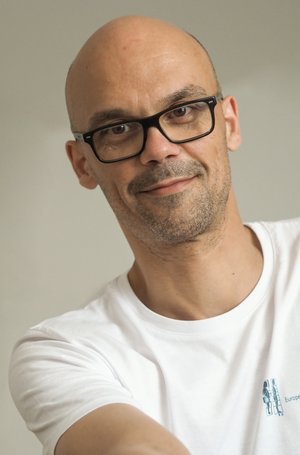
Tobias Elliott-Walter is a certified Rolfer® Structural Integration practitioner, certified ScarWork™ practitioner, and Sivananda yoga teacher based in Saarbrücken, Germany. Through Body & Beyond, he provides bilingual bodywork and health education in English and German, with a focus on fascia, movement, stress, recovery, and holistic health.
With nearly 30 years of experience working with people — across leadership development, mentoring, and international training environments in Europe, Asia, the Middle East, and North America — Tobias brings a practical, culturally sensitive perspective to bodywork. Education is central to his approach: helping people understand what their body is doing, and why, is part of the work itself.
Professional qualifications and standards
Rolfing® is a registered service mark of the Dr. Ida Rolf Institute of Structural Integration.
Sharon Wheeler’s ScarWork™ refers to the specific methodology developed by Sharon Wheeler.
All trademarks mentioned remain the property of their respective owners.
Medical and scientific statements are based on current research, professional training, and practical experience. The services and educational content offered through Body & Beyond are intended to support general wellbeing, body awareness, and health education. They are not a substitute for medical diagnosis, treatment, or psychotherapy.
Important note
This article is for information purposes only and does not replace medical advice. The information shared here is based on current scientific research and practical experience. If you have any health complaints, please consult your doctor or therapist.
© 2025 Tobias Elliott-Walter. All rights reserved.