How Many Sessions Do I Need? Understanding the Rolfing® 10‑Series
🇩🇪 Diesen Artikel auf Deutsch lesen
One of the most common questions people ask is:
“How many sessions do I need?”
With Rolfing® Structural Integration, you’ll often hear about the classic 10‑Series—a structured sequence of ten sessions that address the whole body.
But what if you’re not sure about committing to ten sessions? What if you “just” have neck pain, or you’re curious but want to start slowly?
This guide explains:
What the Rolfing® 10‑Series is (in simple terms)
When a shorter trial or a few focused sessions might make sense
How to think about “how many sessions” in a way that fits your needs
1. What is the Rolfing® 10‑Series?
The 10‑Series is a structured process developed by Dr. Ida Rolf. It’s not ten identical sessions—each one has its own focus and goal, and together they systematically help reorganize your body from head to toe.
Very simply:
Sessions 1–3
Work with the “outer” layers and your relationship to breathing, support from the feet, and basic ease in standing and walking.
Themes: breath, feet, legs, length and space in the body.
Sessions 4–7
Go deeper into the core—pelvis, spine, diaphragm, shoulders, neck.
Themes: support from the centre, connection between upper and lower body, organizing yourself in gravity.
Sessions 8–10
Focus on integration—helping your body use its new options in everyday movement.
Themes: whole-body coordination, walking, stability, and ease in daily life.
You can think of it like this:
First, we open the windows and doors, then we rearrange the furniture, and finally, we help you actually live in your “new space.”
2. Do I Have to Do All Ten Sessions?
No—you’re not signing a contract with your body.
Some options:
Single session
To get a feel for the work and the practitioner.
Useful if you’re curious but unsure, or if you want to see how your body responds.
Short trial (e.g. 3 sessions)
Often enough to notice clear changes in one or two key areas (like breathing, feet, neck/shoulders).
Great if you’re cautious with time or budget, or not sure yet whether a full series is right for you.
Focused block (e.g. 5 sessions)
Lets you work more deeply on a specific theme (like desk-related tension, running/walking, or recovery after a particular event).
Still more flexible than a full 10-Series.
Full 10-Series
Best if you want to address your whole body organization—not just one symptom.
Especially helpful for long-standing patterns (chronic pain, posture issues, recurring injuries) or if you’re looking for a deeper reset.
A good Rolfer® will never push you into ten sessions.
You can decide step by step, depending on:
How your body responds
How your life and schedule look
What feels realistic and helpful for you
3. How Often Should I Come?
There’s no single rule, but common rhythms are:
Every 1–2 weeks during a series:
This gives your body time to integrate the changes, while keeping the process connected.Sometimes every 3–4 weeks:
This can be helpful if your schedule or nervous system needs more space between sessions.
Between sessions, your body is still:
Adapting to new movement options
Reorganizing fascia and nervous system patterns
Testing out the changes in daily life
You don’t need to rush through the 10‑Series. What matters most is that the pace feels sustainable and right for you.
4. What if I “Only” Have One Problem Area?
Many people come in saying things like:
“It’s just my neck.”
“It’s only my lower back.”
“It’s just this one hip.”
From a Rolfing® Structural Integration perspective, these are often spots where a whole-body pattern is showing up most clearly.
You can absolutely:
Start with a trial of 1–3 sessions focused on your main concern
Then decide together whether it makes sense to zoom out and work more globally
Sometimes:
A few sessions focused on one area are enough for now
Sometimes your body makes it clear that the “one problem” is part of a bigger pattern—and then a more systematic approach (like the 10-Series) can be helpful
You are always free to say:
“I’d like to start small and then re-evaluate.”
5. When Does the 10‑Series Make Particular Sense?
The 10‑Series can be especially useful if:
You’ve had chronic pain or tension for a long time, and it affects more than one area
You feel your whole posture and movement are impacted (e.g., “I feel crooked,” “I collapse when I stand”)
Old injuries or surgeries seem to influence other parts of your body
You’re in a phase of life where you want a deeper reset—such as after burnout, major life changes, or a long period of neglecting your body
It’s also a good fit if you are:
Curious about your body as a long-term project, not just a short-term fix
Willing to notice and explore changes between sessions
Open to combining hands-on work with small awareness or movement suggestions
6. What Happens After the 10‑Series?
The 10‑Series isn’t the end of the story—it’s more like a new baseline from which you can continue to live, move, and train.
After a series, many people:
Take a break to let things settle
Come back for occasional follow-up sessions (e.g., every few months)
Use shorter blocks of sessions when life changes (like a new job, pregnancy, surgery, or increased training load)
Some people like to have:
“Maintenance” sessions—perhaps 2–4 times a year—to help prevent old patterns from creeping back and to support the body through stress or ageing.
There is no obligation. The idea is to give your body tools and options it can keep using—with or without regular sessions.
7. So… How Many Sessions Do You Need?
There’s no fixed number that fits everyone.
You might ask yourself:
How long have I had my current issue?
Am I mainly looking for short-term relief, or for a more fundamental change?
How much time, money, and energy can I realistically invest in the next few months?
Am I willing to pay a bit of attention to my body between sessions?
A simple way to start can be:
Book 1–3 sessions focused on your main issue.
Notice what changes—in pain, ease, posture, breathing, mood.
Then discuss with your Rolfer®:
Does a short series (e.g., 5 sessions) make sense?
Is this the right moment for the full 10‑Series?
Or is what has already changed enough for now?
You don’t have to decide everything at the beginning.
You can let your body’s response guide your next step.
In Summary
The Rolfing® Structural Integration 10‑Series is a structured way to work through your whole body—from the outer layers, to the core, to integration.
You don’t have to commit to all ten sessions from the start.
Shorter trials (1–3 or 5 sessions) can be a great way to begin, especially if you’re cautious or focusing on one main issue.
How many sessions you “need” depends on your history, your goals, your resources—and how your body responds.
If you’re unsure, you’re welcome to start small, ask questions, and decide step by step.
Your body isn’t a project that has to be “finished” in ten sessions—but the 10‑Series can be a powerful framework if you’re ready for a more complete reset.
More from Body & Beyond
Further reading
If you’re curious about how load, posture and pain interact over time, these resources can be a starting point:
McGill SM (2015). Low Back Disorders: Evidence-Based Prevention and Rehabilitation. Human Kinetics.
Louw A et al. (2013). Why Do I Hurt? A Patient Book About the Neuroscience of Pain. Noigroup.
These references provide general background information and do not replace individual medical assessment or treatment.
Professional qualifications and standards
Rolfing® is a registered service mark of the Dr. Ida Rolf Institute of Structural Integration.
Sharon Wheeler’s ScarWork™ refers to the specific methodology developed by Sharon Wheeler.
All trademarks mentioned remain the property of their respective owners.
Medical and scientific statements are based on current research, professional training, and practical experience. The services and educational content offered through Body & Beyond are intended to support general wellbeing, body awareness, and health education. They are not a substitute for medical diagnosis, treatment, or psychotherapy.
ABOUT THE AUTHOR
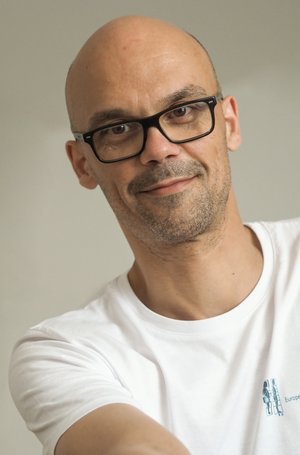
Tobias Elliott-Walter is a certified Rolfer® Structural Integration practitioner, certified ScarWork™ practitioner, and Sivananda yoga teacher based in Saarbrücken, Germany. Through Body & Beyond, he provides bilingual bodywork and health education in English and German, with a focus on fascia, movement, stress, recovery, and holistic health.
With nearly 30 years of experience working with people — across leadership development, mentoring, and international training environments in Europe, Asia, the Middle East, and North America — Tobias brings a practical, culturally sensitive perspective to bodywork. Education is central to his approach: helping people understand what their body is doing, and why, is part of the work itself.
Important note
This article is for information purposes only and does not replace medical advice. The information shared here is based on current scientific research and practical experience. If you have any health complaints, please consult your doctor or therapist.
© 2025 Tobias Elliott-Walter. All rights reserved.