Rest as a Training Tool: Fascia & Recovery
🇩🇪 Diesen Artikel auf Deutsch lesen
When people think about getting stronger, fitter, or more resilient, they often focus on:
Training plans
Sets, reps, and intensity
New exercises or equipment
All of that matters. And most people these days—especially those who train seriously—know that rest and recovery are essential parts of the process. But there’s more to effective recovery than simply taking a break or having a “lazy day.”
From a fascia and nervous system perspective, rest isn’t separate from training—it’s a vital part of it. The quality of your rest and the way you support your body between sessions directly influence how your tissues adapt, how you feel, and how long your body can keep performing.
In this article, we’ll explore:
What your fascia is doing between sessions
Why constant overload can backfire
How rest, movement, and bodywork—like Rolfing® Structural Integration and ScarWork™—can work together for long-term health
1. What Your Fascia Does After You Train
Fascia isn’t just passive wrapping around your muscles—it’s a living, adaptive tissue that:
Responds to load (how much, how often, and in which directions)
Changes its density and organization over time
Helps transmit force and store elastic energy
After you train, your fascia:
Needs time to rehydrate (fluid exchange within the tissue)
Repairs tiny micro-strains and reorganizes collagen fibers
Adjusts to the movement patterns you repeat most often
If you never give your fascia this time, you’re essentially sending the message:
“Adapt faster—but with fewer resources.”
That’s when tissues can start to feel:
Stiff and “sticky”
Sore for longer than usual
More vulnerable to overload and injury
2. Stress, Fascia, and the “Always On” Body
It’s not just physical training that your fascia responds to.
Your nervous system and fascia are closely connected. When you’re under ongoing stress—whether from work, family, or everyday life—your body often shifts into:
Increased muscle tone (subtle bracing throughout the body)
Faster, shallower breathing
Less time spent in true rest and repair modes
From your fascia’s perspective, this can feel like:
Constant low-level tension
Fewer opportunities to soften and reorganize
More “background clenching” in areas like the jaw, neck, shoulders, or pelvic floor
If you then add intense training on top of this without enough recovery, your system is being challenged from both sides: mentally/emotionally and physically.
3. Rest vs. Doing Nothing: What Recovery Really Means
Rest doesn’t have to mean lying on the sofa for three days (though sometimes that’s exactly what your body needs).
From a fascia and nervous system perspective, recovery can include:
Sleep: Deep, regular, good-quality sleep is one of the best “recovery tools” for your fascia and muscles.
Light movement: Walking, gentle mobility, or easy cycling—movement that keeps fluids circulating without adding heavy load.
Down-regulation: Anything that helps your nervous system shift out of “fight or flight”—like breathing exercises, time in nature, or quiet moments without screens.
Manual therapy / bodywork: Rolfing® Structural Integration, ScarWork™, massage, and other hands-on approaches that help tissues soften, reorganize, and release unnecessary tension.
Rest is less about “doing nothing” and more about:
“Giving your body the conditions it needs to repair, adapt, and come back stronger.”
4. What Happens When You Never Really Rest
In the short term, you might get away with:
Training hard
Sleeping too little
Ignoring small warning signs
But over time, many people notice:
Persistent pain that never fully goes away
Feeling “tired but wired”—exhausted, but unable to truly relax
More frequent injuries or recurring issues in the same areas
The sense that training only drains energy, instead of boosting it
From a fascia perspective, this can mean:
Tissues that stay too dense and tight
Less glide between layers—things start to feel stuck or “rusty”
Compensation patterns that get stronger instead of resolving
Your body is doing its best to protect you—but without proper recovery, it has fewer options.
5. How to Think of Rest as Part of Your Training Plan
Instead of:
“I’ll rest when I’m injured.”
“Rest days are for lazy people.”
You might try:
Planned rest days
At least 1–2 days per week without heavy training.
These can still include light movement—like walks or gentle mobility.
Deload weeks
Every few weeks, reduce training volume or intensity so your tissues can catch up.
Especially important if you train with heavy weights or high impact.
Sleep as a training variable
Aim to protect 7–9 hours of sleep when possible.
Treat bedtime like an important appointment, not just an afterthought.
Body signals as feedback, not weakness
Notice when “normal training soreness” turns into persistent pain, deep fatigue, or a sense of dread before training.
6. Where Fascia-Focused Bodywork Fits In
Hands-on work like Rolfing® Structural Integration and ScarWork™ doesn’t replace training or rest—but it can meaningfully support both.
It can help to:
Reduce chronic tension that your body may have come to see as “normal”
Improve alignment and movement patterns, so load is shared more evenly
Soften and integrate old scars that affect how forces travel through your body
Give your nervous system a clear experience of “it’s safe to let go”
Many people notice after a series of sessions:
Training feels more efficient—less like fighting against their own body
Recovery feels deeper—they don’t stay in “high alert” mode all the time
They can better distinguish between “good effort” and “pushing too far”
7. Simple Questions to Check Your Recovery
You might ask yourself:
Do I often feel more tired after training days than on rest days—even with lighter sessions?
Do I sleep well and wake up reasonably refreshed, or does it feel like I’m never really catching up?
Do the same areas (like lower back, knees, or shoulders) keep flaring up, no matter how much I stretch or strengthen them?
Do I give myself permission to rest before pain or exhaustion forces me to?
If several of these sound familiar, it might be less about “doing more” and more about giving yourself the chance to recover better.
8. Training, Fascia, and Long-Term Health
You don’t have to choose between being active and protecting your body.
From a fascia and nervous system perspective, long-term health often means:
Enough load to keep your tissues strong and adaptable
Enough rest and variety to let them repair and reorganize
Enough awareness to adjust your approach before your body has to “shout” for attention
Rest isn’t a reward you have to earn by working hard enough. It’s:
One of the essential tools that allows your training—and your life—to truly work in your favor.
If you’d like support in finding that balance, fascia-focused bodywork like Rolfing® Structural Integration and ScarWork™ can help your body let go of old patterns, recover more deeply, and stay adaptable for the long term.
More from Body & Beyond
Professional qualifications and standards
Rolfing® is a registered service mark of the Dr. Ida Rolf Institute of Structural Integration.
Sharon Wheeler’s ScarWork™ refers to the specific methodology developed by Sharon Wheeler.
All trademarks mentioned remain the property of their respective owners.
Medical and scientific statements are based on current research, professional training, and practical experience. The services and educational content offered through Body & Beyond are intended to support general wellbeing, body awareness, and health education. They are not a substitute for medical diagnosis, treatment, or psychotherapy.
Further reading
If you’re interested in the background of training load, recovery and how the body adapts over time, these resources can be a starting point:
McGill SM (2015). Low Back Disorders: Evidence-Based Prevention and Rehabilitation. Human Kinetics.
Sapolsky RM (2004). Why Zebras Don’t Get Ulcers. Holt.
Louw A et al. (2013). Why Do I Hurt? A Patient Book About the Neuroscience of Pain.Noigroup.
These references provide general background information and do not replace individual medical assessment or treatment.
ABOUT THE AUTHOR
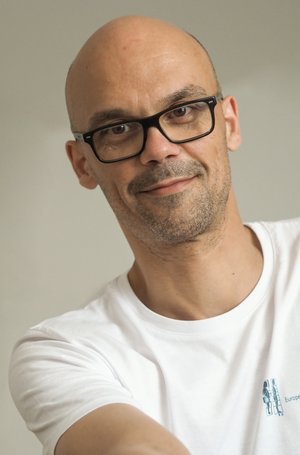
Tobias Elliott-Walter is a certified Rolfer® Structural Integration practitioner, certified ScarWork™ practitioner, and Sivananda yoga teacher based in Saarbrücken, Germany. Through Body & Beyond, he provides bilingual bodywork and health education in English and German, with a focus on fascia, movement, stress, recovery, and holistic health.
With nearly 30 years of experience working with people — across leadership development, mentoring, and international training environments in Europe, Asia, the Middle East, and North America — Tobias brings a practical, culturally sensitive perspective to bodywork. Education is central to his approach: helping people understand what their body is doing, and why, is part of the work itself.
Important note
This article is for information purposes only and does not replace medical advice. The information shared here is based on current scientific research and practical experience. If you have any health complaints, please consult your doctor or therapist.
© 2025 Tobias Elliott-Walter. All rights reserved.