What Is Rolfing® Really?
🇩🇪 Diesen Artikel auf Deutsch lesen
A Clear Guide for People with Pain, Posture Issues, and Tension
If you’ve landed here, one of these probably sounds familiar:
Your back, neck, or shoulders are always tense.
You feel “crooked,” hunched, or older than you are.
You’ve tried massage, physiotherapy, or stretching—but the effects never last.
You’ve heard of “Rolfing®” somewhere or seen it online—and now you’re wondering:
What actually happens in Rolfing®—and is it right for me?
In this article, I’ll explain Rolfing® in plain language: what it is, how it works, what a session looks like, and who can benefit.
1. What is Rolfing®?
Rolfing® Structural Integration is a form of manual bodywork and movement education that works specifically with your fascia—the connective tissue that surrounds and links everything in your body.
Think of it like this:
Manual work with the hands to gently reorganize tissue that’s stuck, shortened, or “held”
Posture and movement education so your body can actually use this new freedom in daily life
The goal isn’t just to “relax your muscles” for an hour.
The goal is to help your whole body find a more aligned, upright, and effortless way of standing and moving.
2. Rolfing®—Maintenance for the One Body You Can’t Replace
We take our car in for regular check-ups—but many people only go to the doctor when something really hurts.
Rolfing® takes a more preventive approach: it cares for the structure of your body and supports your nervous system—much like a regular service for your car.
We work with your fascia—the body’s “inner suit,” which can get twisted and tense over time.
We help your body stand and move with more ease and less effort.
You’ll drop into deep relaxation, allowing your “rest and repair mode” to finally switch back on.
Rolfing® supports:
Healthy, upright posture
Smooth, easy movement
A calmer, more resilient nervous system
Not just to help you feel better today, but also to support your mobility, independence, and mental clarity for as long as possible—within your individual possibilities.
3. Why Fascia Matters (and How Massage and Rolfing® Differ)
Fascia is like a three-dimensional web that connects muscles, bones, organs, and nerves. When it’s healthy, it’s elastic, supple, and well-hydrated.
But over time, various factors can affect your fascia:
Old injuries or surgeries
Hours of sitting at a desk
Stress and emotional strain
Repetitive movements in daily life, work, or sports
This can make fascia stiffer, less flexible, or “twisted.” You might notice:
Persistent tension or pain
Feeling “pulled” or crooked
Limited mobility
Heaviness or fatigue in your body
Wellness massage can be very soothing here:
It loosens tight muscles, boosts circulation, and brings relaxation.
Rolfing® takes a different approach:
It focuses specifically on the fascia and your entire body structure in relation to gravity. The work aims to release deeper patterns and tension in the connective tissue, improve posture in a lasting way, and give your body more ease and freedom of movement.
Rolfing® is often deeply relaxing: I always work with your nervous system—not against it. The goal is to give your body a safe space for genuine change and regeneration.
4. The Idea Behind Rolfing®: Your Body in Gravity
Dr. Ida Rolf, who developed Rolfing®, asked a simple but powerful question:
“What happens if we help the body align better in gravity?”
Her observation:
When the body is more aligned and supported—when feet, knees, pelvis, spine, and head are stacked more harmoniously—many things shift:
Pain can ease because your body isn’t constantly “fighting” gravity.
Breathing becomes easier.
Movement feels lighter and more coordinated.
The nervous system can shift from “fight or flight” into “rest and restore.”
Rolfing® is a structured way to guide your body in this direction.
5. What Happens in a Rolfing® Session?
Every Rolfer® has their own style within the Rolfing® framework. Here’s what a typical session with me looks like:
a) Conversation
We start with a short chat:
What brings you here? (Pain, posture, stress, old injuries, curiosity…)
What’s your daily life like? (Work, sports, sleep, stress level)
Are there any medical issues I should know about?
This helps us set a realistic goal for our work together.
b) Observing Standing and Walking
I’ll ask you to stand and take a few steps.
Sometimes I’ll also ask you to do specific movements—like raising your arms, turning, or standing on one leg.
I look at:
How your feet touch the ground
How your knees, hips, and pelvis move
How your spine curves, how your shoulders and head are positioned
Where your body is “working too hard”—and where it’s more passive
This isn’t about judging your body, but understanding how your system is currently organized.
c) Hands-On Work on the Table
You’ll lie on a comfortable, heated table—in underwear, sportswear, or swimwear, whatever feels comfortable for you.
I use slow, precise, and usually gentle techniques on different areas of your body:
Sometimes more superficial, sometimes a bit deeper
Always with the intention of inviting more space, glide, and length into the tissue
I’ll often ask you to breathe or make small, slow movements
Many people describe the touch as:
“Intense, but relieving”
“Like letting go—I didn’t know I needed that”
“Surprisingly gentle—I thought Rolfing® would be painful”
d) Integration and Movement
At the end of the session:
We’ll check again how you stand and walk
Explore small movements that help your body use its new freedom
Talk about what you notice: more space, more stability, less pull, easier breathing, etc.
You’ll leave the session with a noticeable difference—sometimes very clear, sometimes more subtle.
6. Is Rolfing® Painful?
That’s one of the biggest myths.
Old stories about “very painful Rolfing® sessions” persist—but modern Rolfing® looks different.
My approach:
I work with your nervous system, not against it
We stay within a range where you can breathe and stay present
If your system is stressed or very sensitive, I use gentler techniques
You may feel distinct sensations—stretch, pressure, a “good pain”—but you should always:
Feel safe
Feel respected
Feel free to say, “That’s too much for me,” or “Can we change position?”
Gentle touch can have a powerful effect—we don’t need to fight your body to create change.
7. How Many Sessions Will I Need?
There are different ways to work with Rolfing®:
Single sessions: For a specific issue (e.g., neck tension, lower back, an old injury) or just to get to know Rolfing®.
3–5 sessions: To go deeper into a clear topic (e.g., desk posture, breathing, feet and walking, support after surgery).
The classic 10-series: A structured process of 10 sessions, where we systematically address the whole body. Each session has a focus (e.g., breathing, support from the feet, pelvis-spine relationship), and together they enable deep, longer-lasting change.
Think of it like this:
A massage = a nice break
A Rolfing® series = a comprehensive “reorganization” of your body in gravity
We’ll decide together what makes sense for your situation, your time, and your budget.
8. Who Can Benefit from Rolfing®?
Rolfing® is especially helpful for people who:
Suffer from chronic tension or pain (e.g., in the neck, shoulders, back, or hips)
Feel crooked, hunched, or chronically stiff
Work long hours at a desk or in high-responsibility, high-stress roles
Want to move more efficiently, economically, and with fewer injuries as athletes
Feel their body is “not quite right” after injuries or surgery (often combined with ScarWork™)
Want to age well, stay mobile, and feel more comfortable and resilient in their own body
As musicians, actors, or creative professionals, want to improve body awareness, expressiveness, and performance—whether playing an instrument, on stage, or in creative daily life
Rolfing® isn’t a miracle cure and doesn’t replace medical diagnosis or emergency care. But it can be an important building block for long-term issues like posture, tension, and movement.
9. What Changes Are Realistic?
Clients often report:
Less pain and fewer “flare-ups”
A feeling of more uprightness, lightness, and grounding
Looser, smoother walking
Freer, deeper breathing
Better body awareness and clearer boundaries
Improved sleep quality and a calmer nervous system
Changes can be felt immediately or appear gradually. Your body often continues integrating the work for days or weeks after a session.
10. Rolfing® as Regular “Maintenance”—Not a Luxury
We:
Take our car for check-ups
Update our phones
Take care of our homes
But we often expect our bodies to just keep going, no matter what.
Rolfing® isn’t just for acute crises. Many people use it as regular maintenance:
A few sessions per year
To stay mobile, reduce stress, and catch issues early
You only have one body. You can’t trade it in—but you can maintain it and take good care of it.
11. Is Rolfing® Right for You?
If you:
Feel stuck in recurring patterns of tension or pain
Want more than just a short-term fix
Are curious how your body might feel with more space, alignment, and ease
…then it might be worth trying Rolfing®.
If you’re unsure, you can:
Book an initial session to see how your body responds
We’ll look together at whether a few sessions or the full 10-series is the best fit for you
More from Body & Beyond
Further reading
If you’d like to dive deeper into Rolfing® and fascia, these resources can be a starting point:
Rolf I (1977). Rolfing: Reestablishing the Natural Alignment and Structural Integration of the Human Body for Vitality and Well-Being. Healing Arts Press.
Stecco C (2014). Functional Atlas of the Human Fascial System. Elsevier.
These references provide general background information and do not replace individual medical assessment or treatment.
Professional qualifications and standards
Rolfing® is a registered service mark of the Dr. Ida Rolf Institute of Structural Integration.
Sharon Wheeler’s ScarWork™ refers to the specific methodology developed by Sharon Wheeler.
All trademarks mentioned remain the property of their respective owners.
Medical and scientific statements are based on current research, professional training, and practical experience. The services and educational content offered through Body & Beyond are intended to support general wellbeing, body awareness, and health education. They are not a substitute for medical diagnosis, treatment, or psychotherapy.
ABOUT THE AUTHOR
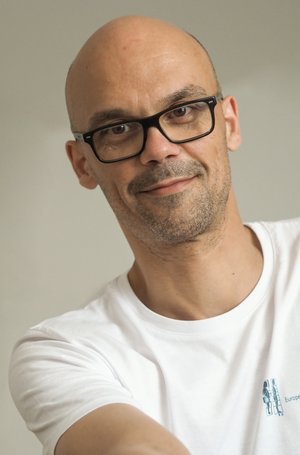
Tobias Elliott-Walter is a certified Rolfer® Structural Integration practitioner, certified ScarWork™ practitioner, and Sivananda yoga teacher based in Saarbrücken, Germany. Through Body & Beyond, he provides bilingual bodywork and health education in English and German, with a focus on fascia, movement, stress, recovery, and holistic health.
With nearly 30 years of experience working with people — across leadership development, mentoring, and international training environments in Europe, Asia, the Middle East, and North America — Tobias brings a practical, culturally sensitive perspective to bodywork. Education is central to his approach: helping people understand what their body is doing, and why, is part of the work itself.
Important note
This article is for information purposes only and does not replace medical advice. The information shared here is based on current scientific research and practical experience. If you have any health complaints, please consult your doctor or therapist.
© 2025 Tobias Elliott-Walter. All rights reserved.