How to Choose the Right Bodyworker: 7 Questions to Ask Before You Book
🇩🇪 Diesen Artikel auf Deutsch lesen
There are many options when it comes to hands-on work:
Rolfing® and other Structural Integration methods
physiotherapy and osteopathy
massage, sports massage, lymphatic work
ScarWork™, craniosacral therapy, and more
That’s good news — but it can also be confusing.
This article isn’t here to tell you that one method is “the best”. Instead, it’s designed to help you ask better questions, so you can find a practitioner and an approach that fit you and your situation.
Sometimes that will be one main method. Sometimes a combination makes more sense over time — for example, physiotherapy plus occasional Rolfing®, exercise plus ScarWork™.
Here are seven questions you can ask yourself — and your potential practitioner — before you book.
1. What is my main goal right now?
Before you compare methods, it helps to get clear on what you actually want help with.
For example:
pain relief (acute or chronic)
better posture or easier movement
recovery after surgery, pregnancy, or injury
support with stress, tension, and the “always on” feeling
sports performance, mobility, or injury prevention
long-term maintenance and body awareness
You don’t need perfect words. A simple sentence like, “My lower back hurts when I sit, and I feel stiff in the mornings,” is already very helpful.
Different practitioners may be a better fit for different goals. A good bodyworker will also tell you honestly if your concern is outside their scope — and refer you on if needed.
2. What kind of touch and approach do I prefer?
Not all bodywork feels the same. Some approaches are:
more deep and direct (e.g. structural work, some sports massage)
more gentle and subtle (e.g. craniosacral work, some fascia- or nervous-system-oriented methods)
more movement-based (you move while you’re being worked on)
more relaxation-focused (you mostly receive)
You can ask yourself:
Do I usually like deeper pressure — or do I tense up quickly?
Do I want to be more involved (moving, giving feedback), or mostly relax?
Am I curious about understanding my patterns, or do I mainly want to switch off?
When you contact a practitioner, you could say:
“I tend to be sensitive to deep pressure — can your work be adapted?”
“I’d like a more active approach where I also learn something about my body. Is that part of your sessions?”
Their answer will tell you a lot.
3. What training and experience does this person have—and is it relevant to my situation?
Titles and certificates aren’t everything, but they do matter.
You can look for:
Which training they completed (school, method, duration)
Whether they have additional training relevant to your needs (e.g., ScarWork™ for scars, sports-related courses, trauma-sensitive work, pregnancy/postpartum experience)
How long they have been practicing
You can ask:
“What kind of training did you do?”
“Do you have experience with [my issue]—for example, post-surgery work, desk-related pain, or postpartum recovery?”
“Are you comfortable working alongside other professionals—like my physiotherapist or doctor?”
A good practitioner will usually be open to these questions and see their work as one part of your overall support—not the only answer.
You don’t need someone with every possible certificate. What you do want is someone who:
Knows what they are doing
Knows when something is outside their field
Is willing to refer you to a doctor or another specialist if needed
4. How does the practitioner talk about results and expectations?
This is an important one.
Be cautious if you hear:
promises like “We will definitely heal X”,
very dramatic before-and-after stories or presentations,
guarantees that sound “too good to be true”.
Trustworthy language sounds more like:
“Many people with similar concerns report …”
“We can explore what’s possible together, and then decide how to move forward.”
“I can’t promise specific results, but I can explain what we’re working on — and why.”
You can ask, for example:
“What’s realistic to expect in my situation?”
“After how many sessions do people with similar symptoms often notice first changes?”
“How will we decide together whether it makes sense to continue?”
You should leave the conversation with hope and options — but not with a guarantee that no serious practitioner can honestly give.
5. Do I feel safe asking questions and saying “no”?
A method can be wonderful — but if you don’t feel safe with the person, it’s not the right fit.
Notice, for example:
how they respond when you ask questions
whether they explain what they’re doing in a calm, clear way
whether they actively invite feedback about pressure, comfort, and boundaries
You can ask directly:
“Is it okay if I say ‘stop’ or ‘that’s too much’ at any point?”
“How do you handle it if I don’t want a certain area to be touched?”
A good bodyworker will:
welcome your questions
respect your boundaries — without pressure or irritation
see you as a partner in the process, not a passive object to be “fixed”
6. How do sessions fit into my everyday life and budget?
Practical questions matter too.
Consider:
Time: How long is a session? Can you realistically fit it into your week without adding extra stress?
Frequency: Does the practitioner expect weekly sessions, or is there flexibility?
Cost: Is the price per session — and any package structure — clear and transparent?
Location & accessibility: Can you get there easily? Are there stairs, parking, or public transport?
You can ask:
“How often do you usually see people with my issue?”
“Do you offer packages, or do you recommend booking one session at a time?”
“Is there anything I should plan for before or after the session (e.g. not rushing straight back into a very intense meeting)?”
You can also consider:
whether you want to focus on one method for a while, or
combine approaches (for example, regular physio plus occasional structural work — or massage plus specific scar work).
There’s no single right formula. The key is that the plan feels realistic and sustainable for you.
7. What does my gut feeling say after the first contact?
Beyond methods, titles, and prices, there’s something quieter:
your sense of whether this person feels like a good fit.
After a first email, phone call, or session, ask yourself:
Did I feel listened to — or rushed?
Did I feel judged — or met with curiosity and respect?
Did I feel I could be honest about my pain, fears, or limits?
Do I feel at least a bit lighter, clearer, or more hopeful?
If something feels off, it’s absolutely okay to:
not book at all
try one session and then decide
change practitioners later if you realise you need something different
You are not “difficult” for wanting to feel safe and well-supported. That’s part of good care.
In summary: choose a person, not just a method
Rolfing®, physiotherapy, massage, ScarWork™, osteopathy, and many other approaches can all be valuable — each in different ways, and at different times.
You don’t always have to choose just one. For many people, the best support is:
one main approach for a period of time
complemented by other methods when needed (for example, medical care, physio, sports massage, or specific scar work)
Instead of searching for “the one right method”, you might focus on:
your goal right now
the kind of touch and approach that suit you
a practitioner whose training, communication, and boundaries feel trustworthy
and, if needed, a small team of professionals who are willing to work together
If you’d like to explore whether Rolfing® Structural Integration or ScarWork™ could be a good fit for you — on their own or alongside other care — you’re welcome to ask questions before you book.
Further reading
If you’re curious about the background of fascia, pain and movement, these resources can be a starting point:
Stecco C (2014). Functional Atlas of the Human Fascial System. Elsevier.
Moseley GL & Butler DS (2017). Explain Pain Supercharged. Noigroup.
These references provide general background information and do not replace individual medical assessment or treatment.
Professional qualifications and standards
Rolfing® is a registered service mark of the Dr. Ida Rolf Institute of Structural Integration.
Sharon Wheeler’s ScarWork™ refers to the specific methodology developed by Sharon Wheeler.
All trademarks mentioned remain the property of their respective owners.
Medical and scientific statements are based on current research, professional training, and practical experience. The services and educational content offered through Body & Beyond are intended to support general wellbeing, body awareness, and health education. They are not a substitute for medical diagnosis, treatment, or psychotherapy.
ABOUT THE AUTHOR
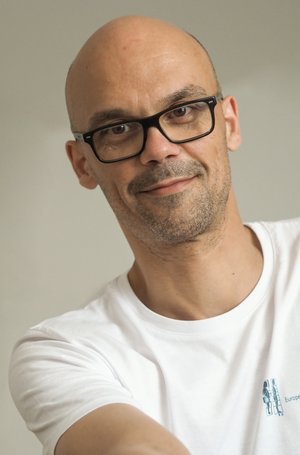
Tobias Elliott-Walter is a certified Rolfer® Structural Integration practitioner, certified ScarWork™ practitioner, and Sivananda yoga teacher based in Saarbrücken, Germany. Through Body & Beyond, he provides bilingual bodywork and health education in English and German, with a focus on fascia, movement, stress, recovery, and holistic health.
With nearly 30 years of experience working with people — across leadership development, mentoring, and international training environments in Europe, Asia, the Middle East, and North America — Tobias brings a practical, culturally sensitive perspective to bodywork. Education is central to his approach: helping people understand what their body is doing, and why, is part of the work itself.
Important note
This article is for information purposes only and does not replace medical advice. The information shared here is based on current scientific research and practical experience. If you have any health complaints, please consult your doctor or therapist.
© 2026 Tobias Elliott-Walter. All rights reserved.