Aftercare That Actually Helps: What to Do After a Session (and What to Skip)
🇩🇪 Diesen Artikel auf Deutsch lesen
After a Rolfing® Structural Integration® session (or any focused hands-on session), many people ask the same thing:
“What should I do now?”
The short answer is: give your system good information, not more intensity. Your body and nervous system need a bit of time to register changes, test them in real movement, and decide what to keep.
This article is for education and orientation only. It does not replace medical advice, diagnosis, or treatment.
1) The goal of aftercare: integration, not perfection
A session can change how you sense yourself: pressure distribution, ease of breathing, how your feet meet the ground, how your spine stacks.
Aftercare is not about “holding” the result. It’s about: - giving your nervous system calm, clear feedback - letting your body explore new options in everyday movement - avoiding overload that forces you back into bracing
A useful principle: less is more for the first 24 hours.
2) What to do after a session (simple and effective)
Move gently (yes, movement matters)
Light movement helps your system “map” changes: - a 10–30 minute walk - easy cycling - gentle mobility in a comfortable range - normal daily movement with a bit more attention
Hydrate and eat normally
No special detox rules. Just support recovery: - drink water as you normally would (a bit more if you tend to under-drink) - eat a normal meal with enough protein and carbs
Notice, don’t judge.
Body awareness is a huge part of integration. Try: - “What feels different when I stand?” - “Where do I brace less?” - “What feels clearer or more stable?”
If something feels odd, that does not automatically mean something is wrong. It can be your system updating its “settings”.
3) What to skip (or at least postpone)
Heavy workouts right after a session
What I generally do not recommend is a heavy strength session, intense intervals, or a hard class immediately afterwards.
Why? Because high intensity can: - override subtle changes - increase bracing - load tissues and joints before your coordination has caught up
Competitions and performance peaks
If you have a competition, a major performance, or a very important training session, it’s usually better to plan your bodywork so you have recovery time in between.
A simple rule: don’t schedule your session right before something where you must perform at 100%.
4) “But I have plans today” — what I usually say
Real life happens. If you already have something scheduled the same day, I generally let you do it.
The key is how you do it: - keep intensity moderate - prioritise good technique and pacing - stop if your body says “enough”
5) Your body awareness matters (and your training background changes the rules)
Aftercare is not one-size-fits-all.
A sports professional (or someone who trains regularly) often has more freedom because their system is used to demanding activity and they can regulate load well.
If you are less trained, under-recovered, stressed, or very sensitive to change, you may need more simplicity: - lighter movement - more rest - fewer inputs
The best aftercare is the one that leaves you feeling: - more grounded - more coordinated - and not “wrecked”
6) A practical 24-hour aftercare plan (optional)
If you like structure, try this:
1. Right after the session: 5–10 minutes of easy walking and breathing
2. Later that day: a relaxed walk (10–30 minutes)
3. Evening: early night if possible; keep screens and stimulation lower
4. Next day: return to training, but start at 70–85% and see how your body responds
Body & Beyond take
The best integration happens when you combine good hands-on work with real-life movement — and you give your nervous system time to adapt.
If you’re unsure what’s appropriate after your session, ask. We can tailor aftercare to your schedule, training level, and goals
More from Body & Beyond
Professional qualifications and standards
Rolfing® is a registered service mark of the Dr. Ida Rolf Institute of Structural Integration.
Sharon Wheeler’s ScarWork™ refers to the specific methodology developed by Sharon Wheeler.
All trademarks mentioned remain the property of their respective owners.
Medical and scientific statements are based on current research, professional training, and practical experience. The services and educational content offered through Body & Beyond are intended to support general wellbeing, body awareness, and health education. They are not a substitute for medical diagnosis, treatment, or psychotherapy.
ABOUT THE AUTHOR
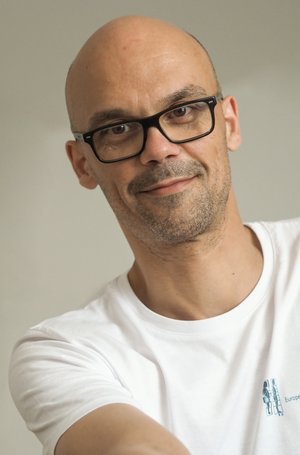
Tobias Elliott-Walter is a certified Rolfer® Structural Integration practitioner, certified ScarWork™ practitioner, and Sivananda yoga teacher based in Saarbrücken, Germany. Through Body & Beyond, he provides bilingual bodywork and health education in English and German, with a focus on fascia, movement, stress, recovery, and holistic health.
With nearly 30 years of experience working with people — across leadership development, mentoring, and international training environments in Europe, Asia, the Middle East, and North America — Tobias brings a practical, culturally sensitive perspective to bodywork. Education is central to his approach: helping people understand what their body is doing, and why, is part of the work itself.
Important note
This article is for information purposes only and does not replace medical advice. The information shared here is based on current scientific research and practical experience. If you have any health complaints, please consult your doctor or therapist.
© 2026 Tobias Elliott-Walter. All rights reserved.