Rolfing® vs. “Normal Massage”: What’s the Difference?
🇩🇪 Diesen Artikel auf Deutsch lesen
If you have tension or pain, you might find yourself wondering:
“Should I book a massage — or would Rolfing® Structural Integration® be a better fit?”
Both can be helpful, but they work in different ways.
In this article, I’ll explain in simple terms:
how Rolfing® Structural Integration® and “classic” massage differ
what each approach is usually best suited for
how to decide what you need right now
1. What people usually mean by “normal massage”
When people say “normal massage”, they often mean:
a wellness/relaxation massage (spa, hotel, general wellbeing)
classic or Swedish massage
sometimes sports massage
The main focus is usually to:
relax muscles
reduce stress
support circulation
give you a general sense of wellbeing
A good massage can:
ease tight areas
help you feel calmer
improve your sleep for a while
give you a pleasant “reset” feeling
For many people, that’s exactly what they need — especially after a stressful week.
2. What Rolfing® focuses on
Rolfing® Structural Integration® starts with a different main question:
“How is your whole body organised in gravity?”
Instead of working mainly with individual muscles, Rolfing® works with:
fascia — the connective tissue network that links muscles, bones, organs, and nerves
your overall structure — feet, legs, pelvis, spine, shoulders, head
your movement patterns — how you stand, walk, sit, and breathe
The aim is to:
improve how your body is supported from the ground up
reduce chronic tension that comes from organisation and compensation — not just stress
help you move with more ease and efficiency in everyday life
You can think of it like this:
Massage: “Let’s relax what’s tight.”
Rolfing®: “Let’s understand why it keeps getting tight — and work with the pattern.”
3. How a massage session usually feels vs. a Rolfing® session
Every practitioner is different, but there are some typical differences.
Massage (wellness / classic)
You usually lie still on the table for most of the session.
The therapist often works with oil or lotion directly on your skin.
The touch is often rhythmic and flowing, with a strong focus on relaxation.
There may be quiet background music, dim lighting, and a spa-like atmosphere.
You’re not usually expected to move much or explore posture and movement patterns.
A good massage can still be very skilled, attentive, and therapeutic-feeling — it’s simply aiming for a different kind of outcome.
Rolfing® Structural Integration
You might stand, sit, and lie down at different points during the session.
Work is usually done without oil, with direct contact to fascia.
The touch can be gentle or deeper, but the focus is on supporting changes in structure and movement — not just feeling “soft” for a moment.
We may talk about what you feel, how you stand or walk, and what you’re noticing.
You might be invited to make small movements while I work (e.g. lifting an arm, turning your head, or sensing your feet).
The after-feeling can be different from massage. With massage, people often feel relaxed and “looser”. With Rolfing®, many people notice a more structural kind of change — for example, standing differently, breathing more freely, or feeling more connected through their feet and legs — sometimes right away, sometimes over the next day or two.
Many clients describe Rolfing® as:
“More like a guided exploration of how my body is organised — and how it can move differently.”
4. What problems is massage usually best for?
Massage is often a great choice if you:
are mainly looking for relaxation and stress relief
have short-term tension from a busy week, travel, or a one-off strain
want a general sense of wellbeing without going too deep into patterns
prefer a quiet, spa-like experience where you don’t have to do much
Massage can be especially helpful for:
temporary muscle tightness
general calming of the nervous system
supporting recovery after sport (depending on the type of massage)
5. What problems is Rolfing® usually best for?
Rolfing® Structural Integration can be especially useful if you:
have recurrent or long-standing issues (e.g. neck, shoulders, back, or hips)
feel “crooked”, collapsed, or stiff in your posture
notice your body keeps returning to the same pattern, even after massage
want to understand how your feet, legs, pelvis, spine, and head influence each other
are interested in longer-term change, not just short-term relief
Typical themes people bring to Rolfing® include:
chronic tension or persistent discomfort
postural strain from desk work
old injuries that still affect movement
support during recovery after surgery (often alongside ScarWork™)
the wish to age well, stay mobile, and feel more at home in their body
6. Can Rolfing® also be relaxing?
Yes — many people find Rolfing® Structural Integration® deeply relaxing.
But the main goal isn’t to have you float out as if from a spa treatment. The primary focus is:
better support and organisation in your structure
more efficient movement
less unnecessary effort in everyday life
Relaxation often comes as a side effect of:
feeling more supported
breathing more freely
carrying less chronic tension just to hold yourself up
7. Can massage and Rolfing® work together?
Absolutely.
They don’t have to compete — they can complement each other:
Some people use Rolfing® Structural Integration® for longer-term structural change, and massage for relaxation in between.
After a Rolfing® series, massage can feel even more effective, because your body may be better organised and easier to work with.
If you love massage, Rolfing® doesn’t have to replace it — it can simply help you get even more benefit from all forms of touch and movement.
8. How to decide what you need right now
A few simple questions to ask yourself:
Is this a long-term pattern — or short-term tension?
Long-term, recurring, always in the same spot: Rolfing® Structural Integration® is often a good starting point.
Short-term, after a specific stressor: massage might be enough for now.
Do I mainly want to relax — or do I want to change something?
If your main wish is “switch off and be pampered”: massage.
If your main wish is “understand and change my posture or movement”: Rolfing®.
Am I willing to spend a little time getting to know my body a little better?
Rolfing® tends to work best if you’re curious and open to noticing changes.
Massage usually requires less active involvement.
9. A simple way to think about it
You can imagine it like caring for your home:
Massage is like tidying up and airing out the rooms — it feels good, makes things lighter, and it matters.
Rolfing® Structural Integration is more like checking the structure: floors, walls, foundations, and how everything carries weight.
Both have their place. The question isn’t “Which is better?” but:
“What does my body need most right now — relaxation, structural change, or a bit of both?”
If you’re unsure, you can always:
describe your situation (pain, tension, stress, goals)
ask whether Rolfing® Structural Integration, ScarWork™, or a combination makes sense
start with a first session and see how your body responds
You only have one body. You can’t replace it — but you can choose the kind of support that fits what you need right now.
More from Body & Beyond
Further reading
If you’d like to understand more about structural integration and how it differs from general massage, these resources can be a starting point:
Rolf I (1977). Rolfing: Reestablishing the Natural Alignment and Structural Integration of the Human Body for Vitality and Well-Being. Healing Arts Press.
Stecco C (2014). Functional Atlas of the Human Fascial System. Elsevier.
These references provide general background information and do not replace individual medical assessment or treatment.`
Professional qualifications and standards
Rolfing® is a registered service mark of the Dr. Ida Rolf Institute of Structural Integration.
Sharon Wheeler’s ScarWork™ refers to the specific methodology developed by Sharon Wheeler.
All trademarks mentioned remain the property of their respective owners.
Medical and scientific statements are based on current research, professional training, and practical experience. The services and educational content offered through Body & Beyond are intended to support general wellbeing, body awareness, and health education. They are not a substitute for medical diagnosis, treatment, or psychotherapy.
ABOUT THE AUTHOR
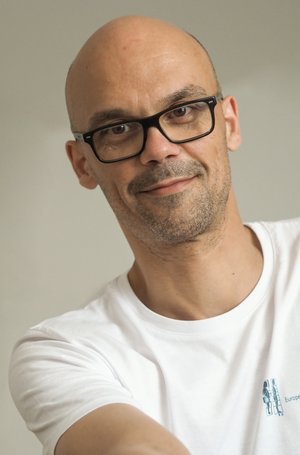
Tobias Elliott-Walter is a certified Rolfer® Structural Integration practitioner, certified ScarWork™ practitioner, and Sivananda yoga teacher based in Saarbrücken, Germany. Through Body & Beyond, he provides bilingual bodywork and health education in English and German, with a focus on fascia, movement, stress, recovery, and holistic health.
With nearly 30 years of experience working with people — across leadership development, mentoring, and international training environments in Europe, Asia, the Middle East, and North America — Tobias brings a practical, culturally sensitive perspective to bodywork. Education is central to his approach: helping people understand what their body is doing, and why, is part of the work itself.
Important note
This article is for information purposes only and does not replace medical advice. The information shared here is based on current scientific research and practical experience. If you have any health complaints, please consult your doctor or therapist.
© 2025 Tobias Elliott-Walter. All rights reserved.