Safety, Consent, and Pacing: Why They Matter in Hands-On Work
🇩🇪 Diesen Artikel auf Deutsch lesen
In hands-on work, what happens is not only about technique.
It is also about how safe, clear, and manageable the experience feels in the moment.
For many people, consent and pacing are treated as politeness or good communication. They are that, but they are also more than that.
They can influence how the nervous system responds, how much effort the body spends on guarding, and whether a person feels able to stay present during a session.
Safety is part of the process
When people feel rushed, uncertain, or unable to speak up, the body may become more guarded. Breathing may change, muscles may tighten, and attention may narrow.
This does not necessarily mean something has gone wrong in a dramatic sense. Often, it means the system is responding to uncertainty or too much input at once.
Feeling safer does not mean feeling perfectly relaxed all the time.
It means there is enough clarity, choice, and steadiness for the person to stay engaged without feeling overwhelmed.
Consent is not a formality
Consent is not only something given once at the beginning of a session. In good hands-on work, it is ongoing.
That may include:
explaining what is going to happen
asking before changing area, pressure, or position
checking whether the pace still feels manageable
making it easy to pause, adjust, or stop
respecting a clear no without pressure or persuasion
This kind of communication may help many people feel more at ease. It can also reduce the sense of being passive or having something done to them.
Pacing matters
Even helpful input can feel too much if it comes too quickly, too intensely, or without enough time to integrate. The body often responds better when there is enough space to notice, adapt, and settle.
Pacing may involve slower transitions, less intensity, more checking in, or allowing silence and pauses. It may also mean recognising when less is more.
This can be especially relevant for people who are already under stress, living with pain, recovering from surgery, or feeling physically or emotionally overloaded. In these situations, gentler pacing may support a more workable experience.
Hands-on work is relational
Manual work does not happen in a vacuum.
It happens between people.
Tone of voice, clarity, respect, predictability, and responsiveness all shape the experience.
A session may feel more supportive when the person receiving the work knows they can ask questions, change their mind, or say that something does not feel right. That sense of agency can matter just as much as the technique itself.
Why this matters in practice
Safety, consent, and pacing are not extras added on top of the work.
They are part of the work.
They help create conditions in which people may feel more settled, more able to notice what is happening, and less likely to brace against the experience.
This does not guarantee any specific outcome, but it can shape how manageable and supportive the session feels.
Final thought
Good hands-on work is not only about what is done. It is also about how it is done, how clearly it is communicated, and how well the process respects the person in front of you.
That is why safety, consent, and pacing matter.
ABOUT THE AUTHOR
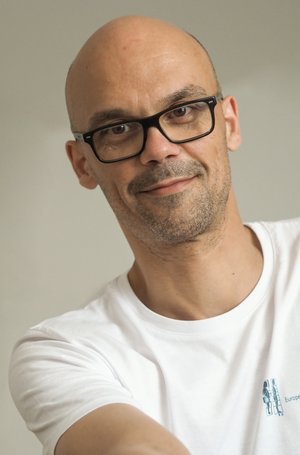
Tobias Elliott-Walter is a certified Rolfer® Structural Integration practitioner, certified ScarWork™ practitioner, and Sivananda yoga teacher based in Saarbrücken, Germany. Through Body & Beyond, he provides bilingual bodywork and health education in English and German, with a focus on fascia, movement, stress, recovery, and holistic health.
With nearly 30 years of experience working with people — across leadership development, mentoring, and international training environments in Europe, Asia, the Middle East, and North America — Tobias brings a practical, culturally sensitive perspective to bodywork. Education is central to his approach: helping people understand what their body is doing, and why, is part of the work itself.
Professional qualifications and standards
Rolfing® is a registered service mark of the Dr. Ida Rolf Institute of Structural Integration.
Sharon Wheeler’s ScarWork™ refers to the specific methodology developed by Sharon Wheeler.
All trademarks mentioned remain the property of their respective owners.
Medical and scientific statements are based on current research, professional training, and practical experience. The services and educational content offered through Body & Beyond are intended to support general wellbeing, body awareness, and health education. They are not a substitute for medical diagnosis, treatment, or psychotherapy.
Important note
This article is for informational purposes only and does not replace medical advice. If you have health concerns, acute symptoms, or ongoing complaints, please consult a qualified medical professional.
© 2026 Tobias Elliott-Walter. All rights reserved.