Why Scars Can Still Hurt or Feel “Strange” Years Later – and What You Can Do
🇩🇪 Diesen Artikel auf Deutsch lesen
Maybe this sounds familiar:
You had surgery or an accident years ago — but the scar area still feels tight, numb, or sensitive.
The scar doesn’t look dramatic, yet something around it just doesn’t feel “right”.
You notice pulling, tingling, or other odd sensations when you stretch, twist, or lie in certain positions.
You might even think:
“This is just how it is now. I should be over it, by now.”
But scars are more than just a line on the skin. They’re part of a living, adapting body — which means they can keep changing, and sometimes keep influencing how you feel and move, long after the wound has closed.
In this article, we’ll explore why scars can still hurt or feel strange years later — and how gentle, fascia-based work may support the area.
1. A scar is not “just skin” — it’s a change in your wider fascial system
When you’re injured or have surgery, your body does something remarkable: it builds scar tissue to close and stabilise the area.
That tissue is strong and protective — but it’s also often:
denser and less elastic than the original tissue
laid down in less organised directions (your body is in “emergency repair” mode, not “perfect design” mode)
Because fascia — the connective tissue network — links skin, muscles, organs, nerves, and bones, a scar is rarely an isolated event. It’s more like:
a knot in a spider’s web — pull on one part, and other parts are affected.
That’s why even a small scar can sometimes have surprisingly wide-ranging effects.
2. Common ways scars can show up years later
Even long after a scar has healed, you might notice:
tightness or pulling when you stretch, twist, reach, or take a deep breath
numbness or reduced sensation in or around the scar
oversensitivity — the area reacts strongly to touch, clothing, or temperature
“strange” sensations like tingling, itching, buzzing, or a sense of “foreignness”
changes in posture or movement — you may avoid certain positions without realising it
discomfort elsewhere (e.g. back pain after abdominal surgery, shoulder tension after breast surgery, hip issues after a C-section)
None of this means something is “wrong” with you. It simply means your body has adapted — and sometimes those adaptations are no longer helpful.
3. Why scars can still hurt or feel odd years later
A few key reasons:
a) Restricted fascia and glide
Healthy fascia allows layers of tissue to slide and glide over each other. Scar tissue can reduce that glide by binding layers together, which over time can lead to:
reduced movement in the area
compensations in nearby joints and muscles
a feeling of pulling, tightness, or “stuckness”
b) Nerves and sensation
Nerves often run through the area where surgery or injury happened. During healing, they can be:
irritated, stretched, or cut
surrounded by denser scar tissue
This can create:
numb patches
hypersensitive spots
odd, hard-to-describe sensations
c) Protective patterns and “memory”
After pain or trauma, your body and nervous system often shift into protection mode:
you unconsciously avoid certain movements
muscles around the scar stay slightly “on guard”
your brain may still treat the area as fragile, even when it’s structurally healed
These patterns can quietly continue for years — until you bring awareness and gentle support back to the area.
4. Emotional layers: why scars are not just physical
Scars often carry emotional stories:
a difficult birth or an emergency C-section
an accident or sudden injury
a cancer diagnosis and treatment
a surgery that changed how you see your body
It’s completely normal if touching — or even thinking about — a scar brings up:
anxiety or tension
sadness or anger
a sense of disconnect from that part of your body
Gentle, respectful ScarWork™ isn’t about “pushing through” these feelings. It’s about creating a safe, supported space where your body and nervous system can soften, reconnect, and gradually integrate what happened.
5. What gentle ScarWork™ and fascia therapy can do
ScarWork™ is a specialised, very gentle approach to working with scars and the surrounding tissue. It doesn’t try to “erase” scars or promise cosmetic results.
Instead, it focuses on:
improving the quality and softness of scar tissue
restoring glide and movement between the layers underneath
supporting more normal sensation (less numbness or hypersensitivity)
helping your whole body adapt more comfortably around the scar
In practice, this can include:
light, precise touch on and around the scar
small, specific movements to invite more space and flexibility
working not only with the scar itself, but also with related areas (like the back, ribs, or pelvis) that may have been compensating
Many people describe ScarWork™ as:
“Surprisingly gentle.”
“Deeply relaxing.”
“Like my body is finally rediscovering this area again.”
6. What a session might look like
A typical scar-focused session with me may include:
Conversation
What happened (surgery, accident, birth, treatment …)?
How long ago was it — and how has it felt since then?
What do you notice now, physically and emotionally?
Looking at posture and movement
how you stand, walk, and breathe
where your body might be protecting or avoiding
Gentle hands-on work
on and around the scar (always with clear consent, and within your comfort)
on related fascial lines and structures (e.g. abdomen and back, chest and shoulders, pelvis and legs)
Integration
time to rest and notice what feels different
simple suggestions for everyday life (e.g. ways of moving, breathing, or gently contacting the area yourself, if appropriate)
You stay in charge at every step. You can always ask to pause, adjust, or stop.
7. What people often notice after scar work
Experiences vary, but people commonly report:
the scar area feels softer, warmer, or more “alive”
less pulling or tightness during certain movements
a more natural, less “foreign” feeling in that part of the body
changes in posture or movement that feel easier and more balanced
a general sense of relaxation and relief
Sometimes changes are subtle at first; sometimes they’re very clear. Often, the body continues to adapt over the days and weeks after a session.
8. What you can do if you have an old scar that still bothers you
A few gentle steps you can take:
Acknowledge that what you feel is real. You’re not “imagining it” or being dramatic. Scars can influence how your body feels, even years later.
Bring curiosity instead of judgement. Notice when the area “speaks up” — certain movements, positions, times of day, or stress levels. That information is genuinely useful.
Consider gentle professional support. Fascia-based work like ScarWork™ and Rolfing® Structural Integration® can support your body in finding more space, softness, and ease around the scar.
Go at your own pace. Especially if there’s emotional history, it’s okay to take small steps and check in with yourself along the way.
9. When to talk to a doctor
ScarWork™ and fascia therapy are complementary approaches. They do not replace medical care.
You should speak to a doctor first if you notice:
sudden changes in colour, temperature, or swelling around the scar
strong, new pain that wasn’t there before
signs of infection — or anything else that worries you
Once your doctor has checked the area and given the go-ahead, gentle scar work can often be a helpful addition.
10. You don’t have to just “live with it”
It’s easy to think:
“It’s been years. Nothing can change now.”
But your body isn’t a fixed machine. It’s a living, adapting system — and that includes your scars.
With time, patience, and the right kind of gentle work, many people notice:
more comfort and ease around old scars
easier movement and posture
a deeper sense of connection to their own body
If you’d like to explore this, you’re welcome to:
ask questions about your specific scar or surgery history
book a session focused on ScarWork™
combine scar work with Rolfing® Structural Integration® to support your whole structure, not just one area
You only have one body. You can’t replace it — but you can support it, even years after an operation or injury.
More from Body & Beyond
Further reading
If you’d like to know more about scar tissue and healing, these resources can be a starting point:
Kwan P et al. (2016). Scar biology and scar therapies. Facial Plast Surg 32(5): 500–506.
Atiyeh BS et al. (2007). Scar quality and physiologic methods of scar management. Aesthetic Plast Surg 31(5): 430–448.
These references provide general background information and do not replace individual medical assessment or treatment.
Professional qualifications and standards
Rolfing® is a registered service mark of the Dr. Ida Rolf Institute of Structural Integration.
Sharon Wheeler’s ScarWork™ refers to the specific methodology developed by Sharon Wheeler.
All trademarks mentioned remain the property of their respective owners.
Medical and scientific statements are based on current research, professional training, and practical experience. The services and educational content offered through Body & Beyond are intended to support general wellbeing, body awareness, and health education. They are not a substitute for medical diagnosis, treatment, or psychotherapy.
ABOUT THE AUTHOR
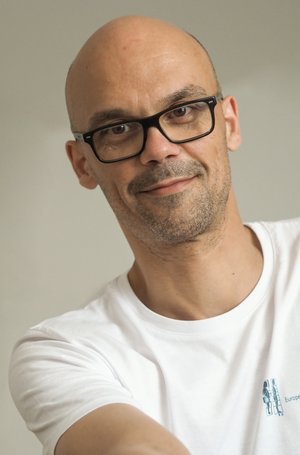
Tobias Elliott-Walter is a certified Rolfer® Structural Integration practitioner, certified ScarWork™ practitioner, and Sivananda yoga teacher based in Saarbrücken, Germany. Through Body & Beyond, he provides bilingual bodywork and health education in English and German, with a focus on fascia, movement, stress, recovery, and holistic health.
With nearly 30 years of experience working with people — across leadership development, mentoring, and international training environments in Europe, Asia, the Middle East, and North America — Tobias brings a practical, culturally sensitive perspective to bodywork. Education is central to his approach: helping people understand what their body is doing, and why, is part of the work itself.
Important note
This article is for information purposes only and does not replace medical advice. The information shared here is based on current scientific research and practical experience. If you have any health complaints, please consult your doctor or therapist.
© 2026 Tobias Elliott-Walter. All rights reserved.