Learning to Notice Without Overanalysing
A Practical Approach to Awareness and Body Literacy
🇩🇪 Diesen Artikel auf Deutsch lesen
People are often told to listen to their body. In theory, that sounds simple. In practice, it can become confusing very quickly.
Some people notice very little until they are already exhausted, overwhelmed, or in pain. Others notice everything and end up stuck in constant checking, second-guessing, and self-monitoring.
Neither extreme is especially helpful. Body awareness is not the same as overanalysing. And body literacy is not about becoming hyper-focused on every sensation.
Awareness is a skill, not a performance
Useful awareness is usually quiet, practical, and flexible.
It helps you notice what is happening without immediately turning it into a problem. It helps you recognise patterns without assuming every signal means something serious. It helps you respond a little earlier, with a little more choice.
That is what body literacy can offer: a clearer relationship with your own signals,
limits, needs, and patterns.
Noticing is different from monitoring
Noticing is often simple.
You realise your jaw is tight. Your breathing has become shallow. You have been sitting in the same position for two hours. You feel more irritable than usual. Your scar area feels more sensitive today. Your energy drops every afternoon when you skip lunch.
That kind of noticing can be useful.
Overanalysing is different. It often adds tension, fear, or pressure. It can sound like:
Why am I feeling this?
Is this normal?
Am I doing something wrong?
What if this means something is getting worse?
Should I be fixing this right now?
At that point, awareness stops being supportive and starts becoming another source of stress.
More information is not always better
Many people assume that more awareness must always be better. But more attention is not always more helpful.
Sometimes the most useful skill is not noticing more. It is noticing enough.
enough to pause
enough to adjust
enough to ask a better question
enough to respond before things escalate
That is very different from scanning yourself all day for signs that something is wrong.
A practical way to build awareness
A helpful approach is to keep awareness simple, specific, and non-dramatic.
You might ask:
What do I notice right now?
Where am I using more effort than necessary?
Do I need movement, rest, food, water, warmth, or a pause?
Is this discomfort increasing, easing, or staying the same?
What changes if I slow down, shift position, or breathe more freely?
These questions support observation without turning every moment into analysis.
Final thought
Learning to notice without overanalysing is part of learning to trust yourself.
Not blindly. Not perfectly. But more steadily.
You do not need to interpret everything. You do not need to monitor yourself all day. And you do not need to turn every signal into a project.
Often, it is enough to notice a little earlier, respond a little more kindly, and give your body a little more room to adapt.
About the author
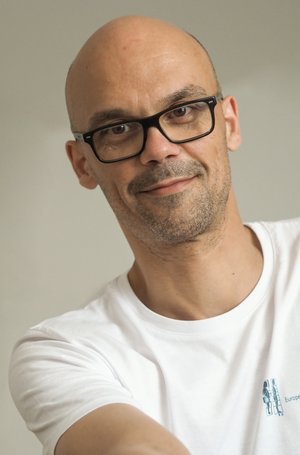
Tobias Elliott-Walter is a certified Rolfer® Structural Integration practitioner, certified ScarWork™ practitioner, and Sivananda yoga teacher based in Saarbrücken, Germany. Through Body & Beyond, he provides bilingual bodywork and health education in English and German, with a focus on fascia, movement, stress, recovery, and holistic health.
With nearly 30 years of experience working with people — across leadership development, mentoring, and international training environments in Europe, Asia, the Middle East, and North America — Tobias brings a practical, culturally sensitive perspective to bodywork. Education is central to his approach: helping people understand what their body is doing, and why, is part of the work itself.
Professional qualifications and standards
Rolfing® is a registered service mark of the Dr. Ida Rolf Institute of Structural Integration.
Sharon Wheeler’s ScarWork™ refers to the specific methodology developed by Sharon Wheeler.
All trademarks mentioned remain the property of their respective owners.
Medical and scientific statements are based on current research, professional training, and practical experience. The services and educational content offered through Body & Beyond are intended to support general wellbeing, body awareness, and health education. They are not a substitute for medical diagnosis, treatment, or psychotherapy.
Important note
This article is for informational purposes only and does not replace medical advice. If you have health concerns, acute symptoms, or ongoing complaints, please consult a qualified medical professional.
© 2026 Tobias Elliott-Walter. All rights reserved.