Small Inputs, Big Effects
Why Tiny Changes Can Matter More Than Dramatic Fixes
🇩🇪 Diesen Artikel auf Deutsch lesen
Many people look for a big breakthrough.
A dramatic treatment.
A perfect exercise plan.
A single insight that changes everything at once.
Sometimes change does happen that way.
More often, though, the body responds to smaller inputs that are repeated, well timed, and easier to integrate into daily life.
That may sound less exciting, but it is often more realistic.
And in many cases, more sustainable.
Why small changes can matter
Your body does not only respond to intensity.
It also responds to pattern, repetition, context, and timing.
Fascia is living, adaptive tissue. The nervous system is constantly filtering information about safety, effort, load, novelty, and threat.
This means that change is not only about doing more. It is also about offering the body inputs it can recognise, organise around, and use.
A small change that you can repeat regularly may have more impact than a dramatic intervention that overwhelms you, creates soreness, or disappears after three days.
This applies to many areas of health and bodywork:
movement habits
posture and variation
sleep and recovery
breathing patterns
stress regulation
scar care and tissue loading
manual work and body awareness
In other words, more is not always better.
Sometimes better is simply better.
The body often adapts through repetition
Tissue adaptation and nervous system regulation usually do not happen all at once. They often develop through repeated experiences.
A short walk every day may do more than one ambitious session every two weeks. A gentler exercise you actually continue may be more useful than a perfect programme you cannot maintain.
A brief pause to breathe, unclench your jaw, or change position may interrupt a stress pattern before it gathers momentum.
These are not magic tricks.
They are small signals.
Over time, they may influence how you move, how you recover, how much effort a task requires, and how your body responds to load.
This is especially relevant when someone is tired, in pain, under stress, or recovering from injury or surgery.
In those situations, the system may respond better to an input that feels manageable than to one that feels forceful.
Why dramatic fixes can fall short
Big interventions can sometimes be useful.
But they are not automatically more effective.
If something is too intense, too complicated, or too far removed from your real life, it may be hard to repeat and even harder to integrate. In some cases, it may also increase guarding, irritation, or the sense that your body is a problem to be fixed.
That does not mean stronger inputs are always wrong. It means they need to match the person, the timing, and the context.
Small does not mean weak.
It can mean precise, appropriate, and better suited to what your system can work with right now.
What small inputs can look like
Small changes are not only about exercise. They can show up in many forms:
getting up two or three more times during the day
walking for ten minutes after a long period of sitting
changing your workspace setup slightly
doing one simple movement regularly instead of five occasionally
using a short evening routine to support downregulation before sleep
approaching scar tissue or sensitive areas gradually rather than aggressively
noticing when you hold your breath or tense your shoulders and making a small adjustments.
None of these actions looks dramatic.
But repeated over days and weeks, they may create meaningful change.
A more useful question
Instead of asking, “What is the biggest thing I can do?”, it may help to ask:
“What is one small thing that feels doable, relevant, and repeatable for me right now?”
That question often leads to better choices. It respects your actual capacity, not just your ambition.
And that matters, because progress is rarely built by intensity alone. More often, it grows through consistency, recovery, and the right input at the right time.
Final thought
If your body has been asking for change, you do not always need a dramatic reset. Sometimes a small, steady input is enough to begin shifting comfort, coordination, and resilience. Not because small things are trivial, but because the body often responds best to what it can recognise, use, and repeat.
That is not a lesser path.
Very often, it is the one that lasts.
ABOUT THE AUTHOR
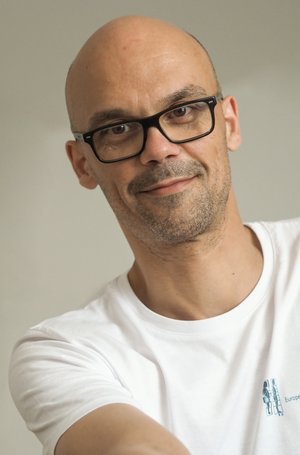
Tobias Elliott-Walter is a certified Rolfer® Structural Integration practitioner, certified ScarWork™ practitioner, and Sivananda yoga teacher based in Saarbrücken, Germany. Through Body & Beyond, he provides bilingual bodywork and health education in English and German, with a focus on fascia, movement, stress, recovery, and holistic health.
With nearly 30 years of experience working with people — across leadership development, mentoring, and international training environments in Europe, Asia, the Middle East, and North America — Tobias brings a practical, culturally sensitive perspective to bodywork. Education is central to his approach: helping people understand what their body is doing, and why, is part of the work itself.
Professional qualifications and standards
Rolfing® is a registered service mark of the Dr. Ida Rolf Institute of Structural Integration.
Sharon Wheeler’s ScarWork™ refers to the specific methodology developed by Sharon Wheeler.
All trademarks mentioned remain the property of their respective owners.
Medical and scientific statements are based on current research, professional training, and practical experience. The services and educational content offered through Body & Beyond are intended to support general wellbeing, body awareness, and health education. They are not a substitute for medical diagnosis, treatment, or psychotherapy.
Important note
This article is for informational purposes only and does not replace medical advice. If you have health concerns, acute symptoms, or ongoing complaints, please consult a qualified medical professional.
© 2026 Tobias Elliott-Walter. All rights reserved.