🇩🇪 Diesen Artikel auf Deutsch lesen
Series note: This article is Part 3 — and the concluding piece — of the series Men, Loneliness, and the Body. Across these three texts, I explore emotional restraint, disconnection, closeness, and embodied stress in relation to men’s lives. They are informed by wider cultural observation, public discussion, and recurring patterns I have encountered in my work. The aim is not to generalise about all men or to offer simple explanations, but to look carefully at themes that are often discussed too little — and to end with a body-based perspective on what may be carried when words are missing.
Not every struggle begins in words.
Sometimes stress, grief, fear, chronic pressure, or loneliness show up first in the body: in a breath that stays shallow, shoulders that never quite soften, sleep that does not restore, digestion that feels unsettled, or a nervous system that seems unable to settle even in quiet moments.
The body does not simply store stories like a container, but it does reflect patterns of adaptation.
It shows how a person has learned to brace, cope, endure, and keep going.
This matters when we think about men and emotional life. If a person has learned from an early age to stay composed, push through, and say as little as possible about what hurts, strain may still appear somewhere.
It may show up as chronic tension, fatigue, irritability, emotional flatness, withdrawal, or a constant sense of inner effort.
Someone may look highly functional and still be living in a body that rarely feels safe enough to soften.
In practice, this can be striking.
Some men arrive not because they want to talk about loneliness, grief, shame, or emotional pressure, but because they feel stiff, tired, compressed, restless, or disconnected.
They may describe poor sleep, difficulty switching off, a sense of being "held" all the time, or the feeling that they are always managing themselves.
They may not use emotional language at all.
And yet the body often reveals a long history of adaptation.
That does not mean every physical symptom is psychological, and it should not be used to make simplistic claims. Pain, fatigue, restriction, and stress responses are always shaped by many factors.
But it can still be useful to recognise that human beings are not neatly divided into body on one side and mind on the other.
How we live, suppress, cope, and adapt may influence posture, breathing, movement, energy, and recovery.
This is one reason embodied work can matter. Not as a replacement for psychotherapy, crisis support, or medical care where those are needed, but as one possible place where people begin to notice themselves more honestly.
Sometimes what is needed is not interpretation, but permission: permission to slow down, feel more, breathe more fully, sense where effort is constant, and experience support without having to perform.
For some men, this may be unfamiliar.
If emotional life has long been narrowed to control, productivity, humour, or endurance, then simple experiences of rest, contact, and internal awareness may already be significant.
Not because touch solves everything, and not because the body contains magical answers, but because awareness can begin where words are absent.
A more humane approach is not to force meaning onto every signal, but to create conditions in which a person is allowed to sense what has been missing.
Sometimes people need language.
Sometimes they need movement, rest, touch, support, or time.
Sometimes they need all of these.
When words are missing, the body may still be telling us that something needs care.
Further reading
If you’d like to explore these themes in more depth, the following sources offer helpful starting points on stress physiology, body awareness (interoception), regulation, and how the nervous system adapts under pressure.
These are educational starting points, not clinical guidance, and they don’t replace medical, psychological, or crisis support where needed.
On interoception in relation to allostasis: https://pmc.ncbi.nlm.nih.gov/articles/PMC12012852/
On interoception and embodied experience (body awareness): https://pmc.ncbi.nlm.nih.gov/articles/PMC9220286/
On trauma, self-regulation, and interoception: https://www.frontiersin.org/journals/psychology/articles/10.3389/fpsyg.2015.00093/full
Accessible explainer on autonomic regulation (polyvagal theory): https://www.polyvagalinstitute.org/whatispolyvagaltheory
More from Body & Beyond
ABOUT THE AUTHOR
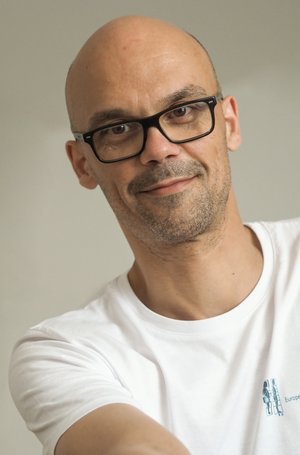
Tobias Elliott-Walter is a certified Rolfer® Structural Integration practitioner, certified ScarWork™ practitioner, and Sivananda yoga teacher based in Saarbrücken, Germany. Through Body & Beyond, he provides bilingual bodywork and health education in English and German, with a focus on fascia, movement, stress, recovery, and holistic health.
With nearly 30 years of experience working with people — across leadership development, mentoring, and international training environments in Europe, Asia, the Middle East, and North America — Tobias brings a practical, culturally sensitive perspective to bodywork. Education is central to his approach: helping people understand what their body is doing, and why, is part of the work itself.
Professional qualifications and standards
Rolfing® is a registered service mark of the Dr. Ida Rolf Institute of Structural Integration.
Sharon Wheeler’s ScarWork™ refers to the specific methodology developed by Sharon Wheeler.
All trademarks mentioned remain the property of their respective owners.
Medical and scientific statements are based on current research, professional training, and practical experience. The services and educational content offered through Body & Beyond are intended to support general wellbeing, body awareness, and health education. They are not a substitute for medical diagnosis, treatment, or psychotherapy.
Important note
This article is for informational purposes only and does not replace medical advice. If you have health concerns, acute symptoms, or ongoing complaints, please consult a qualified medical professional.
© 2026 Tobias Elliott-Walter. All rights reserved.