Working With the Body, Not Against It
A More Sustainable Way to Think About Change
🇩🇪 Diesen Artikel auf Deutsch lesen
Some people relate to their body as if it were a problem to solve.
Something too stiff, too weak, too slow, too painful, too much, or not enough.
The goal then becomes control: push harder, correct more, push past discomfort, and force change to happen.
That mindset is common. But it often creates more tension, frustration, and disconnection.
A more sustainable approach begins somewhere else. Not with force, but with attention.
Not with fighting the body, but with learning how to work with it.
Your body is not simply a machine that needs better discipline. It is a living system that adapts constantly to stress, habits, injury, rest, emotion, environment, and history.
What you feel today is not random.
It may reflect patterns that developed for good reasons, even if they are no longer helpful now.
This does not mean you are stuck. It means change often works better when it begins with understanding rather than aggression.
In bodywork, movement education, and health-related change, this can matter a great deal. If every step is shaped by self-criticism, the process may become exhausting.
If every signal from the body is treated as failure, it becomes harder to notice what is actually needed.
Working with the body may include slowing down enough to feel what is happening.
It may include improving posture without becoming rigid.
It may include building strength without ignoring recovery.
It may include supporting pain or stress patterns with more patience, better timing, and more realistic expectations.
Sometimes progress is not dramatic. Sometimes it looks like breathing more freely, recovering faster, moving with less effort, sleeping better, or noticing tension before it builds too far. These changes may seem small from the outside, but they can be deeply meaningful in daily life.
This way of thinking is not passive. It does not mean “just accept everything” or avoid challenge. It means challenge can be introduced in a way the system can actually integrate.
Sustainable change usually depends less on intensity alone and more on consistency, safety, and context.
For some people, this shift is physical. For others, it is emotional or behavioural.
They begin to replace pressure with curiosity. They stop asking, “How do I force my body to behave?” and start asking, “What is my body responding to, and what might help?”
That question often opens better possibilities.
Methods such as Rolfing® Structural Integration, ScarWork™, movement work, and simple recovery practices can be part of that process. Not because they “fix” the body in a mechanical sense, but because they may support awareness, organisation, adaptability, and a different relationship with strain and change.
There is no perfect body and no perfect posture. There is only a living system, constantly adapting to load, recovery, and life circumstances.
Sometimes the most useful next step is not to push harder, but to listen more carefully and respond more intelligently.
A sustainable path often begins there.
About the author
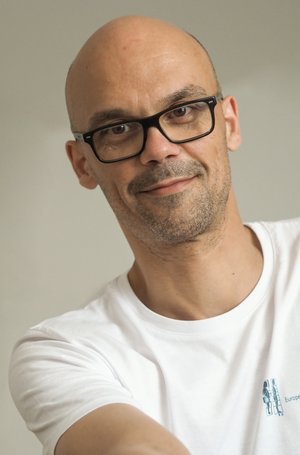
Tobias Elliott-Walter is a certified Rolfer® Structural Integration practitioner, certified ScarWork™ practitioner, and Sivananda yoga teacher based in Saarbrücken, Germany. Through Body & Beyond, he provides bilingual bodywork and health education in English and German, with a focus on fascia, movement, stress, recovery, and holistic health.
With nearly 30 years of experience working with people — across leadership development, mentoring, and international training environments in Europe, Asia, the Middle East, and North America — Tobias brings a practical, culturally sensitive perspective to bodywork. Education is central to his approach: helping people understand what their body is doing, and why, is part of the work itself.
Professional qualifications and standards
Rolfing® is a registered service mark of the Dr. Ida Rolf Institute of Structural Integration.
Sharon Wheeler’s ScarWork™ refers to the specific methodology developed by Sharon Wheeler.
All trademarks mentioned remain the property of their respective owners.
Medical and scientific statements are based on current research, professional training, and practical experience. The services and educational content offered through Body & Beyond are intended to support general wellbeing, body awareness, and health education. They are not a substitute for medical diagnosis, treatment, or psychotherapy.
Important note
This article is for informational purposes only and does not replace medical advice. If you have health concerns, acute symptoms, or ongoing complaints, please consult a qualified medical professional.
© 2026 Tobias Elliott-Walter. All rights reserved.