Moving Countries, Moving Bodies
🇩🇪 Diesen Artikel auf Deutsch lesen
Big changes don’t just happen in your head.
Whether you’re:
moving to a new country or city
travelling frequently for work or family
splitting your life between places
…your body is right there with you, adapting every step of the way.
Many people notice (often without connecting the dots):
new or increased tension (neck, jaw, shoulders, back)
digestive issues or sleep problems
feeling “wired and tired” at the same time
old injuries or pain flaring up again
In this article, we’ll look at how stress and transition show up physically — and how fascia-based work like Rolfing® Structural Integration can support you when life is in motion.
1. Transition is a full-body experience
Changing countries, cities, jobs — or travelling a lot — usually means:
new routines (or no routines at all)
a new language (or new social codes)
different climate, light, and food
practical stress: paperwork, housing, finances, logistics
emotional load: leaving people behind, starting from scratch, uncertainty
Your nervous system is constantly scanning:
“Is this safe? Who are my people? Where do I belong?”
Even if you’re excited about the change, your body may stay in high-alert mode for a while.
That can show up as:
muscles that never fully relax
shallow breathing
restless sleep
a sense of not quite “arriving” in your own body
2. Travel and relocation: what your body is dealing with
Some very practical factors play a role:
sitting for long periods (planes, trains, cars) → stiff hips, back, and neck
carrying luggage → asymmetrical load, shoulder and arm tension
jet lag and time zone shifts → a disrupted sleep–wake rhythm
different beds, pillows, and chairs → your body constantly adapting to new surfaces
new food and water → digestion needing time to adjust
Your fascia — the connective tissue network — responds to all of this. For example:
it can become tighter and less elastic with lack of movement and ongoing stress
old tension patterns can become more pronounced
you might feel less grounded, more “in your head”
3. Emotional stress in the body: not just “in your mind”
Even when a move or trip is chosen — and positive — there can still be:
grief about what you’ve left behind
anxiety about the unknown
loneliness or culture shock
pressure to “make it work” and “be fine”
Your body doesn’t separate “emotional” and “physical” stress. It simply reacts.
Common signs include:
neck and shoulder tension that doesn’t really switch off
jaw clenching or teeth grinding
tightness in the chest or a “knot” in the stomach
feeling disconnected from your body — like you’re functioning, but not really present
From a fascia and nervous system perspective, this is your body’s best attempt (so far) to cope.
4. Why old patterns and injuries often flare up during transitions
You might notice:
an old back issue returning during a stressful move
a previous injury starting to ache again when you travel a lot
headaches or migraines becoming more frequent
This isn’t random.
When your system is under load (practical + emotional + physical), it often falls back into familiar patterns:
old compensations reappear
areas that were always a bit vulnerable start complaining
your capacity to “hold it all together” gets thinner
Think of it like this:
When the overall stress bucket is full, your weakest links speak up first.
5. How fascia-based work can support you in times of change
Rolfing® Structural Integration won’t change your external situation — but it can change how your body lives inside it.
Hands-on work can help to:
reduce chronic tension in key areas (neck, shoulders, back, jaw, hips)
improve breathing and give your ribcage more space to move
support a sense of grounding through feet, legs, and pelvis
integrate old injuries and scars so they feel less reactive under stress
People often describe feeling, after sessions:
“more here” and less scattered
a clearer sense of up/down and inside/outside
deeper, more restful sleep
less pain or fewer flare-ups during busy periods
In times of change, that can make the difference between just surviving — and actually arriving.
6. Small practices for your body when life is in motion
Here are a few gentle ideas you can use while travelling, moving, or going through big transitions. They’re not cures — just anchors.
a) Arrive with your feet
When you get to a new place (hotel, temporary flat, new home):
Stand barefoot (if possible) on the floor.
Feel the contact: heels, balls, toes.
Take a few slow breaths and simply notice: “I am here. My feet are on this ground.”
It sounds simple, but it helps your nervous system register arrival — not just constant transition.
b) Uncurl from travel
After long sitting:
Lie on your back with your lower legs up on a chair or sofa (90° at hips and knees).
Let your back and shoulders sink into the surface.
Breathe into your sides and back for 5–10 minutes.
This gives your spine and fascia a chance to reset from the travel posture.
c) One place of comfort
In times of change, not everything will feel good. Instead of searching for “no tension anywhere”, try this:
Find one area that feels neutral or pleasant (e.g. hands, face, back against a wall).
Give your attention there for a few breaths each day.
This helps your system remember there are still safe, okay places in your body.
7. When to seek more structured support
It might be time to get extra help if you notice:
persistent pain or tension that doesn’t improve with rest
sleep problems, exhaustion, or feeling “tired but wired”
digestive issues or headaches that keep returning
a sense of being disconnected from your body, or “not yourself”
A combination can be very supportive:
medical check-ups to rule out serious issues
psychological support or coaching for the emotional side of transition
bodywork like Rolfing® Structural Integration and ScarWork™ to help your structure and nervous system adapt
8. You’re not “weak” for feeling stress in your body
It’s easy to judge yourself:
“Other people move all the time and they’re fine.”
“I should be grateful, not stressed.”
From a body-based perspective, this misses the point.
Your body isn’t being dramatic. It’s:
tracking change
doing its best to keep you safe
asking for support when the load is high
With the right kind of attention — including touch, movement, and rest — your system can:
let go of some chronic bracing
find more ease and stability
make new places feel more like home, not just another stopover
If you’re in a phase of travelling a lot, relocating, or generally reshaping your life, you’re welcome to:
ask questions about how this shows up in your own body
book sessions focused on stress, transition, and regulation (with or without ScarWork™)
use bodywork as one anchor while everything else is changing
You only have one body. You can’t replace it — but you can help it move with you, instead of feeling constantly left behind or pushed too hard.
Further reading
If you’d like to explore more about fascia, strength and load, these resources can be a starting point:
Stecco C (2014). Functional Atlas of the Human Fascial System. Elsevier.
McGill SM (2015). Low Back Disorders: Evidence‑Based Prevention and Rehabilitation. Human Kinetics.
Behm DG & Chaouachi A (2011). A review of the acute effects of static and dynamic stretching on performance. Eur J Appl Physiol 111(11): 2633–2651.
These references provide general background information and do not replace individual medical assessment or treatment.
About the author
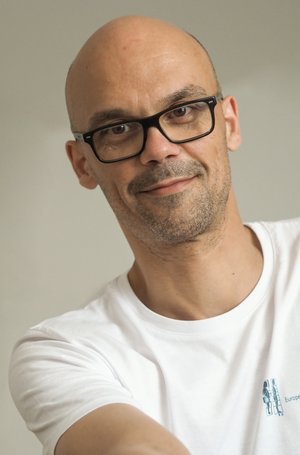
Tobias Elliott-Walter is a certified Rolfer® Structural Integration practitioner, certified ScarWork™ practitioner, and Sivananda yoga teacher based in Saarbrücken, Germany. Through Body & Beyond, he provides bilingual bodywork and health education in English and German, with a focus on fascia, movement, stress, recovery, and holistic health.
With nearly 30 years of experience working with people — across leadership development, mentoring, and international training environments in Europe, Asia, the Middle East, and North America — Tobias brings a practical, culturally sensitive perspective to bodywork. Education is central to his approach: helping people understand what their body is doing, and why, is part of the work itself.
Professional qualifications and standards
Rolfing® is a registered service mark of the Dr. Ida Rolf Institute of Structural Integration.
Sharon Wheeler’s ScarWork™ refers to the specific methodology developed by Sharon Wheeler.
All trademarks mentioned remain the property of their respective owners.
Medical and scientific statements are based on current research, professional training, and practical experience. The services and educational content offered through Body & Beyond are intended to support general wellbeing, body awareness, and health education. They are not a substitute for medical diagnosis, treatment, or psychotherapy.
Important note
This article is for information purposes only and does not replace medical advice. The information shared here is based on current scientific research and practical experience. If you have any health complaints, please consult your doctor or therapist.
© 2026 Tobias Elliott-Walter. All rights reserved.