Your Body as a Long‑Term Project: Why Maintenance Sessions Make Sense
🇩🇪 Diesen Artikel auf Deutsch lesen
In many areas of life, “maintenance” is completely normal:
We take the car in for regular service.
We update our phone and laptop.
We fix things around the house.
When it comes to our own body, a different model is still very common:
“I only go somewhere when it really hurts.”
From a fascia and Rolfing® Structural Integration perspective, that’s a bit like ignoring the engine warning light until the car stops on the motorway.
In this article, we’ll look at why it can be helpful to see your body as a long-term project — and how regular maintenance sessions can support mobility, clarity, and independence as you age.
1. Your body is not a one-off repair — it’s an ongoing relationship
Most people come to bodywork when:
pain has been there for a while
tension is affecting sleep or mood
an injury or surgery has changed the way they move
That’s completely understandable. But healing rarely runs in a straight line from “problem” to “fixed forever”.
Your body:
is constantly adapting to work, stress, ageing, and life events
is always building new habits and patterns
is influenced by sleep, nutrition, movement, emotions, and environment
Seeing your body as a long-term project doesn’t mean something is “broken” all the time. It simply means:
You don’t have to wait until it hurts before you support it.
2. Why “only in emergencies” care is so exhausting
If you only seek help when things are acute, you may recognise this cycle:
pain or tension slowly builds up
you push through and hope it will go away on its own
at some point it gets so bad you can’t ignore it
you get support, things improve …
… and then you wait for the next crisis
This up-and-down pattern can be:
stressful for your nervous system
time- and energy-consuming
frustrating, because it can feel like you’re always “back at square one”
Maintenance work aims to flatten those peaks a little:
fewer extreme highs and lows
more stability and predictability
fewer big “crashes”
3. Fascia, ageing, and why regular input matters
Fascia — your connective tissue network — responds strongly to how you use your body over the years.
With increasing age, stress, and too little movement, fascia can:
lose elasticity
become denser and less well-hydrated
start to restrict movement (and how freely things glide)
Regular, well-timed maintenance sessions can help to:
keep tissue more supple and responsive
support the quality of movement (not just range of motion)
help your body adapt to change instead of getting stuck in old patterns
It’s less about “repairing” and more about updating the system so it stays functional.
4. What maintenance sessions can look like in practice
Maintenance doesn’t mean coming every week. The rhythm is very individual — for example:
Every 4–8 weeks
To keep long-standing issues calmer and reduce the risk of big flare-ups.Seasonally (3–4 times per year)
To review patterns, re-balance things, and support you through particularly busy or stressful phases.After certain events
Travel, intense work periods, surgery, major life transitions.
In a maintenance session, we might:
look again at posture, gait, and breathing
work with the areas that tend to “lock up” first for you (e.g. neck, lower back, hips, jaw)
support scars or old injuries that become more noticeable under stress
give your nervous system a clear signal of “rest and repair”
It’s less about constantly putting out fires — and more about not having to deal with major fires all the time.
5. What people often notice over time
With regular sessions that aren’t only crisis-driven, many people notice:
fewer and milder pain episodes
faster recovery after stress, travel, or intense weeks
a greater sense of being “at home” in their body (less “old” or “stiff”)
better sleep and more stable energy
a clearer sense of what their body needs — and when it’s too much
Importantly, many people also feel more actively involved in their health, rather than at the mercy of symptoms.
6. Maintenance is not a luxury — it’s smart planning
Bodywork is often seen as “wellness” or a nice extra:
“I’ll book something when I have some more spare time and money.”
But if you zoom out and think long term, other questions become more relevant:
What does it cost you to live with ongoing pain, poor sleep, or limited mobility?
How much energy goes into managing symptoms?
What activities do you avoid because your body doesn’t feel “ready” for them?
Maintenance sessions don’t aim for perfection. They aim to:
help you stay as mobile and independent as possible, for as long as possible
support mental clarity and emotional resilience
make it more likely your body can carry you through the life you actually want to live
7. How to find a maintenance rhythm that fits you
A few questions to orient yourself:
How quickly do my typical issues return after a good session?
Are there seasons or phases that are especially demanding on my body?
Am I currently more in a “building” phase (training, projects, study) or in a recovery phase?
Together, we can then:
define a realistic rhythm (e.g. every 6 weeks, or 3–4 times per year)
adjust it when your life situation changes
combine Rolfing® Structural Integration®, ScarWork™, and other elements depending on what you need
The goal isn’t dependency, but partnership:
you, your body, and your practitioner working together over time.
8. Your body is the one project you can’t outsource
For many things, you can hire someone: your car, your household, your finances.
Your body?
You can get support.
You can receive treatment.
You can get advice.
But you can’t hand your body over to someone else to look after it for you.
Seeing your body as a long-term project doesn’t mean you are “complicated”. It means recognising this is the one place you live in every day, for your entire life.
Maintenance sessions are one way of saying:
“I want to move through this body with as much ease and clarity as possible, for as long as I can.”
“I don’t want to wait for the next crisis before I pay attention.”
If you’re curious what a maintenance plan could look like for you, we can:
look at your history (pain, injuries, surgeries, stress)
include your current life load (work, family, training)
sketch a simple, realistic session rhythm for the next 6–12 months
You only get one body. You can’t replace it — but you can treat it like the long-term project it already is.
Further reading
If you’d like to read more about load, adaptation and long‑term health, these resources can be a starting point:
McGill SM (2015). Low Back Disorders: Evidence‑Based Prevention and Rehabilitation. Human Kinetics.
Louw A et al. (2013). Why Do I Hurt? A Patient Book About the Neuroscience of Pain.Noigroup.
These references provide general background information and do not replace individual medical assessment or treatment.
Professional qualifications and standards
Rolfing® is a registered service mark of the Dr. Ida Rolf Institute of Structural Integration.
Sharon Wheeler’s ScarWork™ refers to the specific methodology developed by Sharon Wheeler.
All trademarks mentioned remain the property of their respective owners.
Medical and scientific statements are based on current research, professional training, and practical experience. The services and educational content offered through Body & Beyond are intended to support general wellbeing, body awareness, and health education. They are not a substitute for medical diagnosis, treatment, or psychotherapy.
ABOUT THE AUTHOR
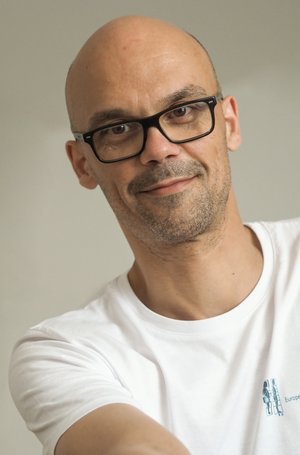
Tobias Elliott-Walter is a certified Rolfer® Structural Integration practitioner, certified ScarWork™ practitioner, and Sivananda yoga teacher based in Saarbrücken, Germany. Through Body & Beyond, he provides bilingual bodywork and health education in English and German, with a focus on fascia, movement, stress, recovery, and holistic health.
With nearly 30 years of experience working with people — across leadership development, mentoring, and international training environments in Europe, Asia, the Middle East, and North America — Tobias brings a practical, culturally sensitive perspective to bodywork. Education is central to his approach: helping people understand what their body is doing, and why, is part of the work itself.
Important note
This article is for information purposes only and does not replace medical advice. The information shared here is based on current scientific research and practical experience. If you have any health complaints, please consult your doctor or therapist.
© 2026 Tobias Elliott-Walter. All rights reserved.