Fascia, Hydration & Fluid Balance: What Helps You and Your Connective Tissue
🇩🇪 Diesen Artikel auf Deutsch lesen
"Drink more water" is common advice. But if you care about fascia and connective tissue, what actually matters?
Many people start looking into hydration because they feel stiff and tense, recover more slowly after sport or long workdays, or notice a "rusty" quality in their movement. In those moments, it helps to understand what hydration really means in the body, and why fascia is often part of the conversation.
This article is educational. It will not promise quick fixes or "miracle" results. Instead, it offers a realistic view of how fascia, hydration, and fluid balance work together, and what you can influence in everyday life.
1) Fascia 101: why hydration matters
Fascia is a 3D network of connective tissue that wraps muscles, bones, organs, and nerves. It helps transmit force and movement, and it plays a role in sensation and body awareness.
A large part of fascial tissue is made up of fibres (collagen and elastin) and a water-rich "ground substance" - a gel-like matrix that supports glide between tissue layers. When that matrix is well hydrated and mobile, many people experience movement as smoother and less "sticky". When it is not, stiffness (especially in the morning or after sitting) and a sense of drag or resistance can become more noticeable.
The key point is this: hydration is not only about how much you drink. It is also about how water is held, moved, and exchanged in tissues.
2) Hydration is not just a full glass: fluid balance basics
Your body manages water across different compartments: inside cells, outside cells, and in the blood volume. That balance is influenced by fluid intake, fluid losses (sweat, breathing, urine), electrolytes (especially sodium), hormones and kidney regulation, and also by movement and pressure changes in tissues.
So yes, drinking water matters. But "more water" is not always the whole story, especially in heat or heavy sweating.
3) Bound water: what it is (and what it is not)
In fascia discussions you may hear the term "bound water". In simple terms, some water in the body moves freely (for example in blood plasma or between cells), while some water is more closely associated with large molecules (such as proteins and glycosaminoglycans) and behaves differently.
In connective tissue, the ground substance contains molecules that attract and hold water. This contributes to that hydrated, gel-like environment that supports glide.
Do you need special products to "create bound water"? Not really.
Bound water is normal biology. Practically, the more useful question is how to support the conditions that keep tissue hydration and glide working well: adequate fluid, adequate electrolytes when needed, and regular movement.
4) How much should you drink? (and what about "1 litre per 20 kg"?)
You may see rules like "1 litre per 20 kg of bodyweight". That kind of formula can be a rough orientation for some people, but it is not a universal rule and it does not apply to everyone.
Fluid needs change with heat and humidity, sweat rate, activity level, body size, diet (food contains water too), pregnancy and breastfeeding, and health conditions or medications where fluid or salt intake matters.
A more realistic everyday approach is to drink regularly across the day, use thirst as a signal, and keep an eye on urine colour (very dark can be a sign you need more fluid). In heatwaves or heavy sweating, it often helps to think beyond water alone and consider electrolytes.
If you have medical conditions where fluid or salt intake matters, get personalised advice.
5) Movement as "internal hydration" for fascia
Even if you drink enough, tissues still rely on movement and pressure changes to exchange fluid. Walking, changing position, breathing, and varied movement all support this. You could say: it is not only about filling the tank, it is also about circulating the fluid.
In practice, this can be as simple as short, frequent walks, gentle dynamic stretching, and not staying in one posture for hours.
6) Heatwaves: hydration, electrolytes, and what actually helps
In heatwaves, hydration becomes less forgiving. When you sweat, you lose both fluid and electrolytes, especially sodium. If you replace only water while sweating heavily, some people feel washed out, headachy, unusually fatigued, or "flat", even though they are drinking a lot.
Electrolytes are charged minerals (ions). In plain language, they help your body manage fluid balance and support normal nerve and muscle function.
You may also notice that some electrolyte products include glucose. The reason is practical physiology: sodium and glucose can be absorbed together in the small intestine (SGLT1 co-transport), and when sodium is absorbed efficiently, water tends to follow. This is the principle behind oral rehydration solutions used in medicine. It does not mean you always need sugar to hydrate, but it helps explain why a salt + glucose combination can be useful when someone is sweating a lot.
A traditional version of this idea exists in many hot countries: a pinch of salt in drinking water (sometimes with a bit of sugar or fruit). The key is context and dose.
If you have high blood pressure, kidney disease, heart conditions, are pregnant, or take diuretics, check with a clinician before using high-sodium electrolyte products regularly. And if severe symptoms occur (confusion, fainting, severe weakness, persistent vomiting, very little urination), seek immediate medical help. Heat illness is serious!
7) WHO angle: quality of water matters too
Hydration is not only about quantity. The World Health Organization (WHO) emphasises that safe drinking-water quality is essential for health. In situations of dehydration (for example diarrhoea), WHO also supports the use of oral rehydration solutions (ORS). That again highlights a practical point: sometimes the body needs water plus electrolytes (and, in ORS, glucose) to rehydrate effectively.
8) How fascia-focused bodywork fits into the picture
Hands-on work like Rolfing® Structural Integration and ScarWork™ can support the "conditions" side of the equation: less bracing, clearer body feedback, and movement that feels easier to organise. That does not replace hydration or recovery, but it can make it easier to move well and consistently - and movement supports fluid exchange.
9) Simple steps (keep it realistic)
If you want a simple starting point, pick two or three: drink regularly across the day, add one extra movement break on sitting-heavy days, and in heat plan electrolytes for heavy sweat days. Over time, small consistent inputs often do more than any single product or "hack".
Further reading
If you’d like to dive deeper into fascia, fluid balance and connective tissue, these resources can be a starting point:
Stecco C (2014). Functional Atlas of the Human Fascial System. Elsevier.
Schleip R et al. (2012). Fascia is able to actively contract and may thereby influence musculoskeletal dynamics. Journal of Biomechanics.
Popkin BM et al. (2010). Water, hydration and health. Nutrition Reviews, 68(8): 439-458.
WHO: Guidelines for Drinking-water Quality: https://www.who.int/teams/environment-climate-change-and-health/water-sanitation-and-health/water-safety-and-quality/drinking-water-quality-guidelines
WHO: Oral Rehydration Salts (ORS) background: https://www.who.int/health-topics/diarrhoea
These references provide general background information and do not replace individual medical assessment or treatment.
About the author
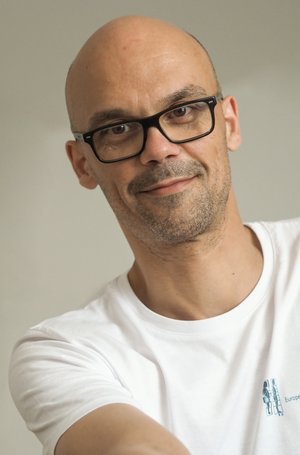
Tobias Elliott-Walter is a certified Rolfer® Structural Integration practitioner, certified ScarWork™ practitioner, and Sivananda yoga teacher based in Saarbrücken, Germany. Through Body & Beyond, he provides bilingual bodywork and health education in English and German, with a focus on fascia, movement, stress, recovery, and holistic health.
With nearly 30 years of experience working with people — across leadership development, mentoring, and international training environments in Europe, Asia, the Middle East, and North America — Tobias brings a practical, culturally sensitive perspective to bodywork. Education is central to his approach: helping people understand what their body is doing, and why, is part of the work itself.
Professional qualifications and standards
Rolfing® is a registered service mark of the Dr. Ida Rolf Institute of Structural Integration.
Sharon Wheeler’s ScarWork™ refers to the specific methodology developed by Sharon Wheeler.
All trademarks mentioned remain the property of their respective owners.
Medical and scientific statements are based on current research, professional training, and practical experience. The services and educational content offered through Body & Beyond are intended to support general wellbeing, body awareness, and health education. They are not a substitute for medical diagnosis, treatment, or psychotherapy.
Important note
This article is for informational purposes only and does not replace medical advice. If you have health concerns, acute symptoms, or ongoing complaints, please consult a qualified medical professional.
© 2026 Tobias Elliott-Walter. All rights reserved.